
Harrison Guy Honors Queer Black History at Project Row Houses
The artist blends activism, memory, and movement through immersive storytelling.

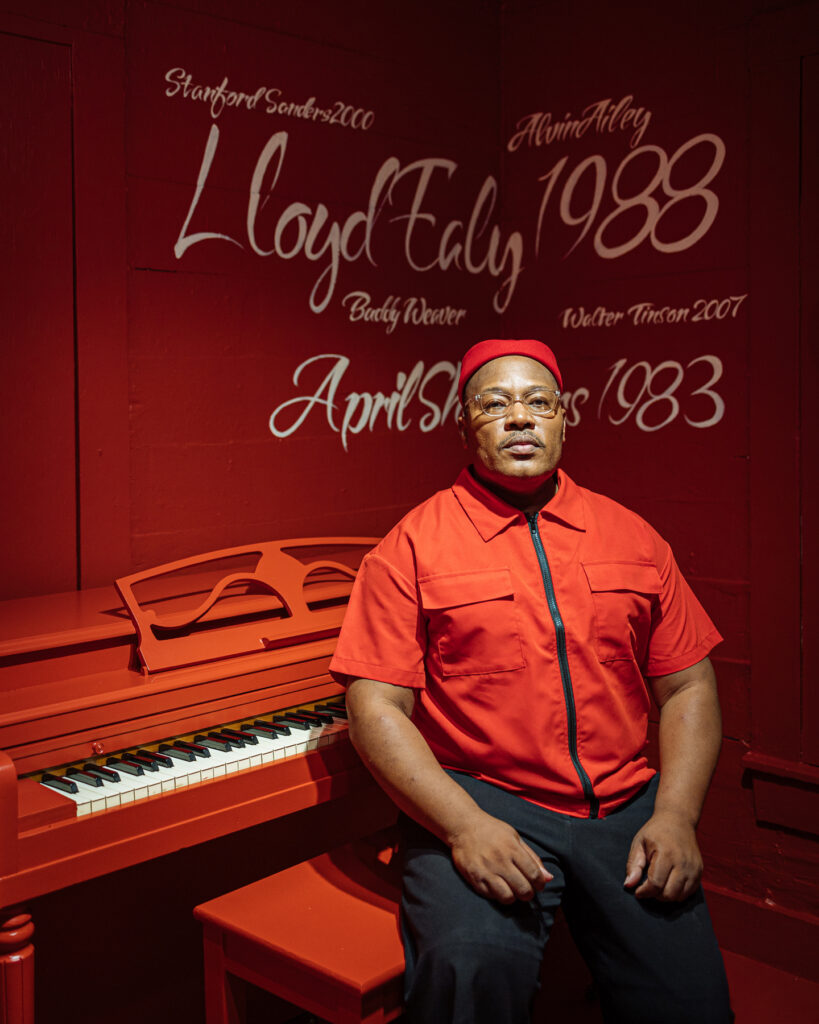
Harrison Guy has worn many hats throughout his career as an artist and activist. The founder and artistic director of Urban Souls Dance Company was the first Black male grand marshal for a Houston Pride parade. He has served as chair of Mayor Turner’s LGBTQ Advisory Board, and he’s now the director of art and culture for the Fifth Ward Cultural Arts District. The evolution of his commitment to community storytelling has led Guy to join Project Row Houses’ Round 59, an exhibit that features a collective of artists with installations that honor their individual experiences alongside the spirit of Houston’s historic Third Ward.
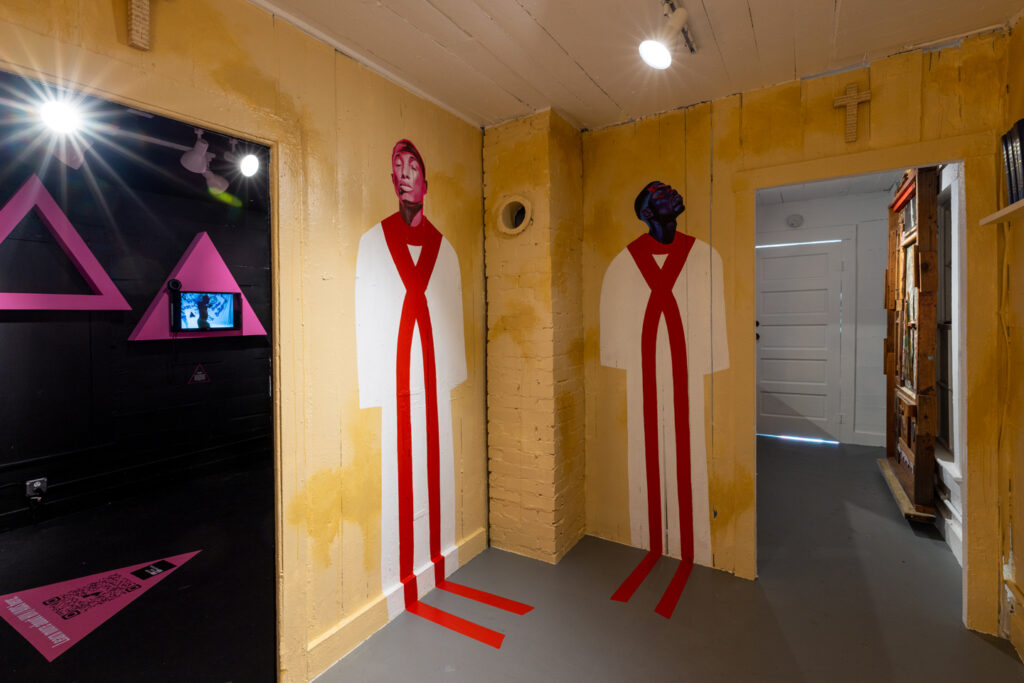
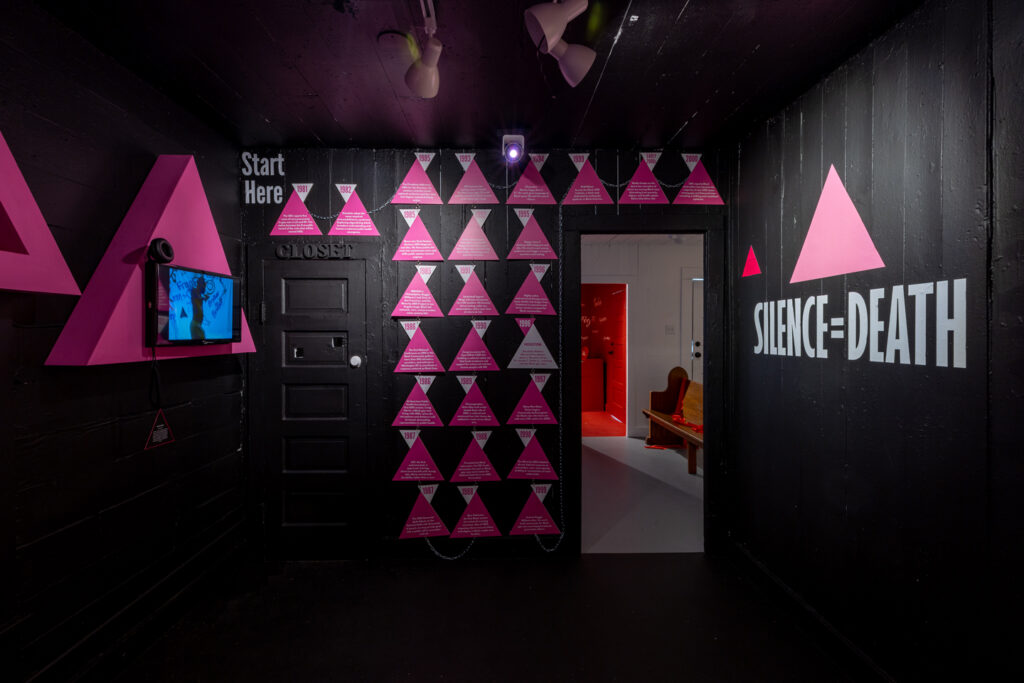
Guy’s installation is titled Bettison’s Benediction: For Choir Boys, Church Queens, and Those Whose Sundays Stopped Too Soon, and honors James Bettison’s life as one of “The Magnificent Seven” founders of Project Row Houses. Located in art house 2517, the installation features four different rooms that provide a space for visitors to learn about queer Black stories in the Houston community and honor those we have lost to the HIV/AIDS epidemic. Guy, 49, says his work at Project Row Houses has been a dream decades in the making.
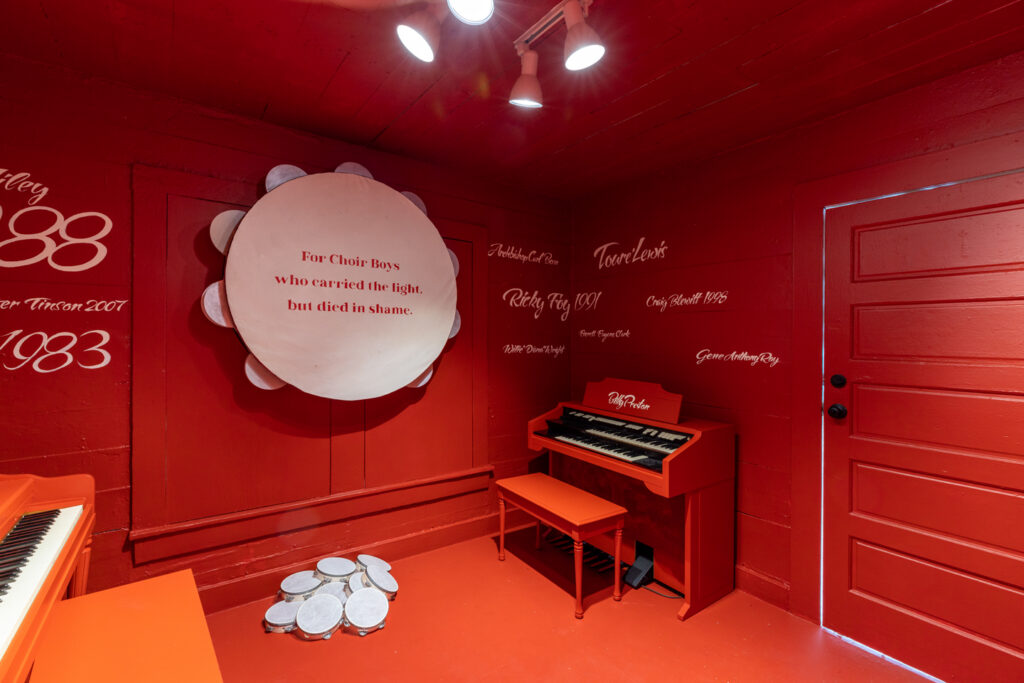
“I’ve always said if I had the opportunity to work with Project Row Houses, I want to do something around HIV in the Black community,” Guy explains. “When they invited me to participate, I had recently learned of Bettison and how he lived with AIDS. I wanted to address the erasure of his story, and I thought providing a space for others to learn about him was the perfect overlap with my original idea to honor those lost to HIV and AIDS.”
Project Row Houses serves as a platform for artists to enrich and socially engage with Houston’s Third Ward community, providing supportive programs, art exhibits, and local development activities with the goal of preserving the neighborhood’s rich culture and history. In line with PRH’s mission, Guy’s installation serves as an important reminder that queer Black stories are also a part of this history.
The space includes an AIDS memorial wall to which visitors can add names via QR code, as well as an educational timeline highlighting Black voices throughout the AIDS epidemic. Guy curated the space with artistic contributions from Keda Sharber, Michael Donte, Shawn Artis, LaToya Smith, Danny Russo, Ella Williams, Edgar Guajardo, Jacques Stratton, and John Nicklos to create an artistic vehicle for people to learn about the nuances of an often-erased time in queer Black history.
“The memorial wall is beautiful, and I want people visiting to know that hard topics can be addressed beautifully,” Guy says. “You don’t have to choose silence because something is negative or sad. I want others to feel inspiration and pride in what they learn here, knowing that queer people are a part of almost every story.”
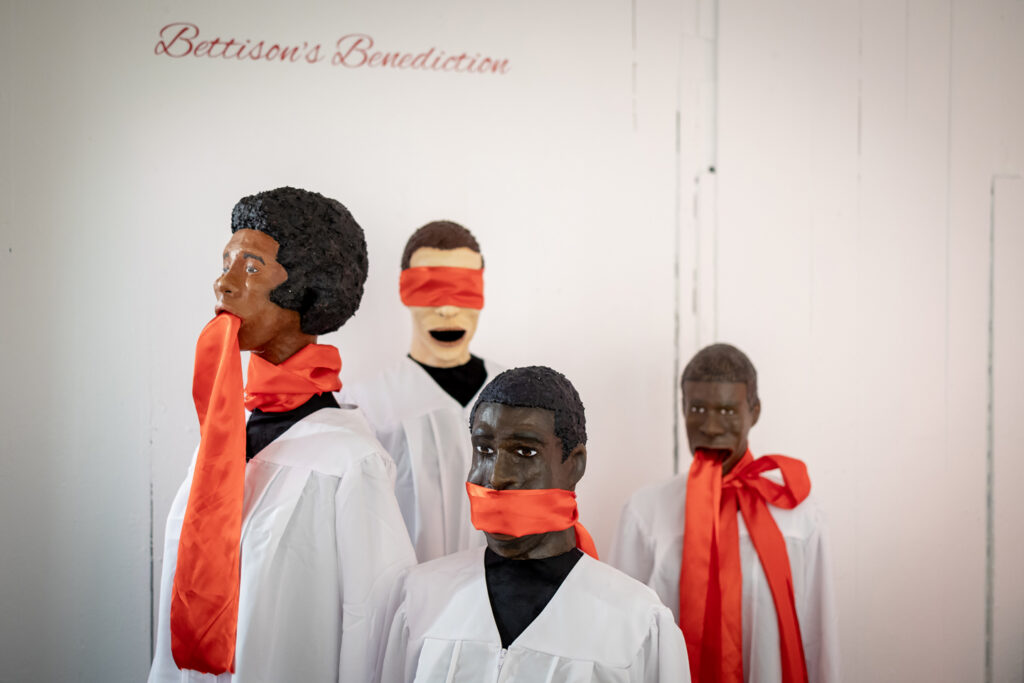
With National Black HIV/AIDS Awareness Day falling on February 7, followed by “HIV Is Not a Crime” Awareness Day on February 28, Bettison’s Benediction exists as a timely opportunity for Houstonians to learn about the overlooked legacies of Black gay men whose creativity has shaped our local and global cultures. Through his previous work with the Donald R. Watkins Memorial Foundation, Guy recalls how working in HIV programming shaped the inspiration for his art.
“The foundation was one of the first Black HIV agencies, and working there showed me that this is a community issue with a community problem to solve,” Guy says. “I learned how you have to have this multi-pronged approach to get people the knowledge they need, and so doing this installation feels like I’m coming home to the work I did 20 years ago.”
Not long after finishing his work in HIV programming, Guy went on to found Urban Souls Dance Company (USDC) in 2004 with the goal of cultivating a community of dancers that could tell powerful Black stories through the art of movement. For Guy, remaining authentic and honest in his storytelling was crucial in carving out a space for local dancers to express these experiences where one did not previously exist.
“I’m originally from La Marque, so moving to Houston and finding dancers to be a part of USDC was a bit of a challenge at first,” Guy recalls. “I was unmovable in being a Black choreographer doing Black queer work, and
I think that isolated us from a lot of audiences and potential partners. It felt lonely at times, but we’ve made a lot of progress in the past 20 years.”
Through the creation of USDC, Guy began choreographing pieces that told the stories of Black community members including Barbara Jordan, Larry Bagneris, and Mickey Leland. Guy explains that in order to share these stories authentically, he began learning about Houston and its Black history in a process he describes as “becoming a student of the city.”
“I’m not from here, and there are so many Black figures in Houston whose stories have been erased, so I wanted to make sure I got it right,” Guy says. “Whether I’m teaching people that Houston’s first Pride parade was organized by a Black man, or stories about the Fourth Ward community paving their own streets, or about the nuances of Barbara Jordan, the common thread is that people need to know these stories, and they can get lost if we’re not telling them.”
With Bettison’s life in mind, Guy felt inspired to not only curate the installation for Project Row Houses, but create a piece for USDC’s upcoming performance titled Truth Be Told. There are five pieces in total as part of the two-night performance, with several pieces being choreographed by Guy and USDC executive director Walter Hull. The performances will premiere at the Hobby Center on February 26 and February 27 as a part of USDC’s annual Black History Month appearances.
For Choir Boys is the section of the upcoming Truth Be Told performance set that will function as an extension of the Row Houses installation, which ends on February 15. Guy says the piece will offer a new artistic medium and perspective to the story that will give audiences a different experience from just seeing the exhibit.
“I love humanizing these stories, because who else can dance about our local people?” Guy points out. “Houston can be very humble, but its greatest asset is its people. Their stories are important, they’re fabulous, and they show you that who you are and where you’re from is enough.”
The experiences of Black queer people and Black women have become foundational to the work that Guy, Project Row Houses, and Urban Souls Dance Company pour out into the Greater Houston community. Being uncompromising when sharing these experiences in rooms that artists are rarely in is something Guy learned is crucial through his earlier work with the Houston LGBTQ+ Political Caucus, and even more so in the current political atmosphere.
“I have very few critiques of the city, but Houston can be very polite when it comes to racism,” Guy says. “It prefers good press over having the hard conversations out loud, but it’s more important now than ever to be having these conversations and sharing these stories. The truth is we’re creating community. When you make space safe for the least of us, you make it safe for everyone, right?”
Keep up with Guy on Instagram @mrharrisonguy. Learn more about Project Row Houses at projectrowhouses.org. Stay up to date with Urban Souls Dance Company at urbansouls.org.