
Menil Spotlights a New Side of Rauschenberg with Fabric Exhibit
The show explores overlooked textile works from the 1970s.
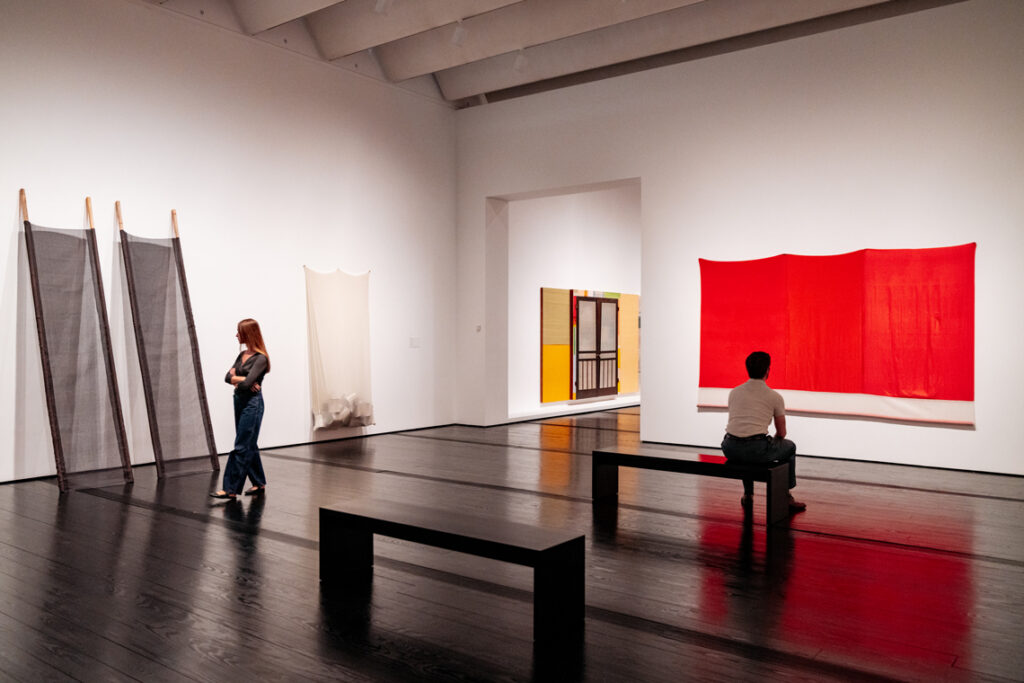
Michelle White, the Menil Collection’s senior curator, was especially excited to organize the exhibit Robert Rauschenberg: Fabric Works of the 1970s. Now on display until March 1, it marks the 100th birthday anniversary of artist Robert Rauschenberg.
Dozens of museums around the world have mounted Rauschenberg shows to mark this anniversary, but White felt she had a unique angle: his fabric work.
“Anyone who thinks that they know Rauschenberg will be surprised by this exhibit,” she says.
“It was exciting to think about what I could do that hasn’t been done with an artist who’s long been considered one of the most important of the 20th century. What facet of his work hasn’t been explored? That’s really how I came to look at the fabric work, which is a part of his work that hasn’t really received a lot of attention. This is the first museum exhibition to focus on the fabric.”
Rauschenberg, who was gay, had deep roots in Texas and a longtime relationship with the Menil Collection. He was born in Port Arthur, a small city some 90 miles from Houston. He briefly attended the University of Texas, and later returned to Texas frequently for exhibitions of his work.
Houston philanthropists and art collectors Dominique and John de Menil had a decades-long relationship with Rauschenberg, and the founding director of the Menil Collection, Walter Hopps, was also a Rauschenberg fan.
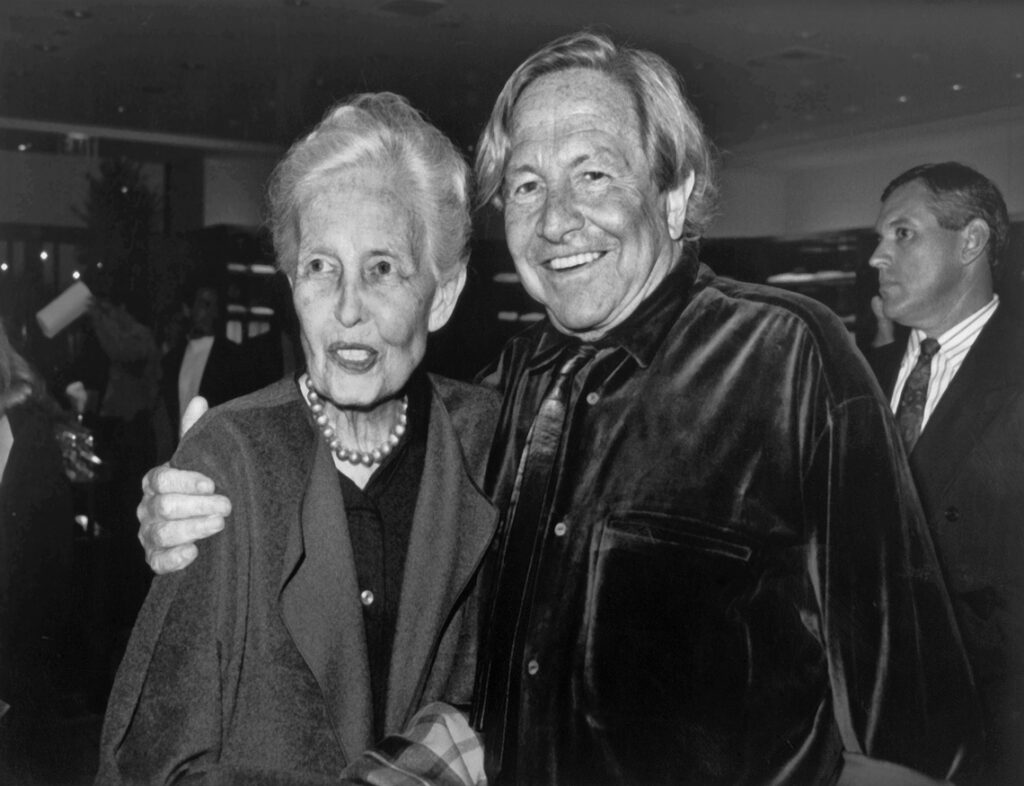
“The Menil’s patronage began in the 1960s,” White says. “Before Walter Hopps came to the Menil, he curated Rauchenberg’s big retrospective at the National Gallery in the late 1970s. When he came to the Menil, he brought his love of Rauschenberg with him and did three more exhibitions. The current exhibit is the fourth major Rauschenberg exhibition the Menil has mounted in its 40-year history.”
But this Rauschenberg exhibit, White says, is different from all of the other ones previously seen at the Menil. “Up until this point in his career, he had worked a lot with found materials. New York City was his palette, and he used everything from taxidermy goats to soiled quilts to old tires. That was a defining feature of his work. That’s how Rauschenberg became well-known. That’s one of the reasons I’m so excited about the show. He uses everything from soiled rags to crimson silk from India, chiffons, and sheers. I was really excited to jump into looking at this part of his work. It offered so many opportunities to me as a historian and scholar to think through its importance.”
The Fabric Works of the 1970s exhibit is made up of Rauschenberg’s work from 1973 to 1976, a time when he was quite prolific. The artist was in his 50s, and at mid-career he was already quite important.
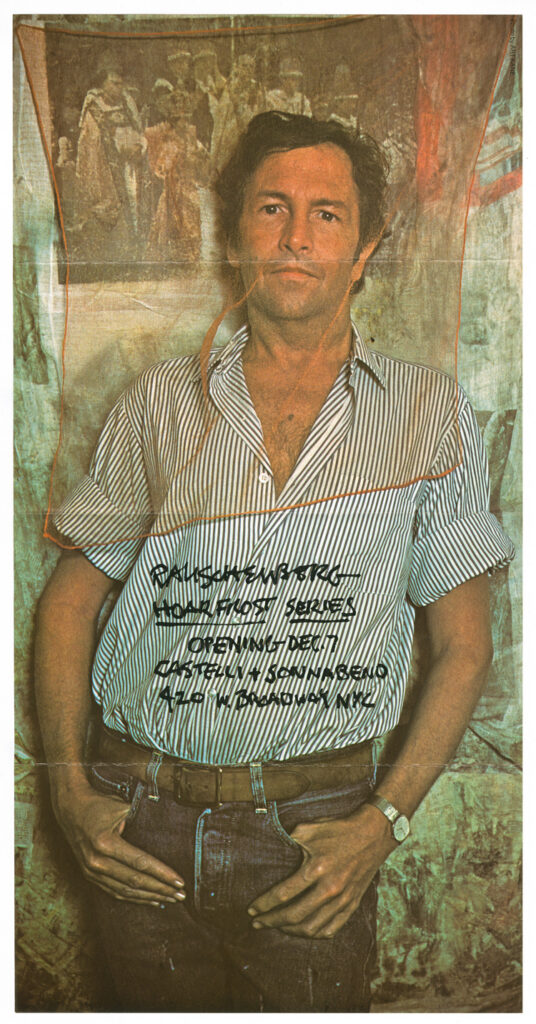
“As you walk through the show, you can see how Rauschenberg is using fabric, and how much he understands how cloth works, how it hangs, how it moves through the air,” White says. “He’s essentially using pieces of fabric to create abstract works of art. What I love about this work is that he’s certainly thinking about notions of beauty because they can be quite stunning. This show will be unexpected. Everything will be a revelation. This is a very different side of the artist.”
One element of Rauschenberg’s brilliance, according to White, is his refusal to adhere to binary ideas. “He wanted to create art that was between sculpture and painting. He wanted to add to the gap between art and life. He was always trying to find that ambiguity. These works very much operated in that space in between.
“What could be more from everyday life than a piece of fabric? We’re wearing it right now. We were born swaddled in it. Rauschenberg really recognized that fabric is one of the most powerful substances from everyday life that you can use.”
WHAT: Robert Rauschenberg: Fabric Works of the 1970s
WHERE: The Menil Collection, 1533 Sul Ross
WHEN: Through March 1, 2026
INFO: menil.org