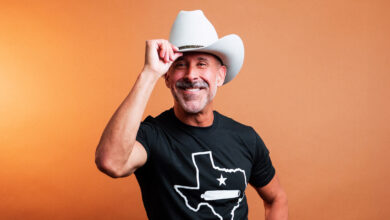

Texas Drag Performers Refuse to Be Silenced
Activists warn vague language could chill protected expression statewide.
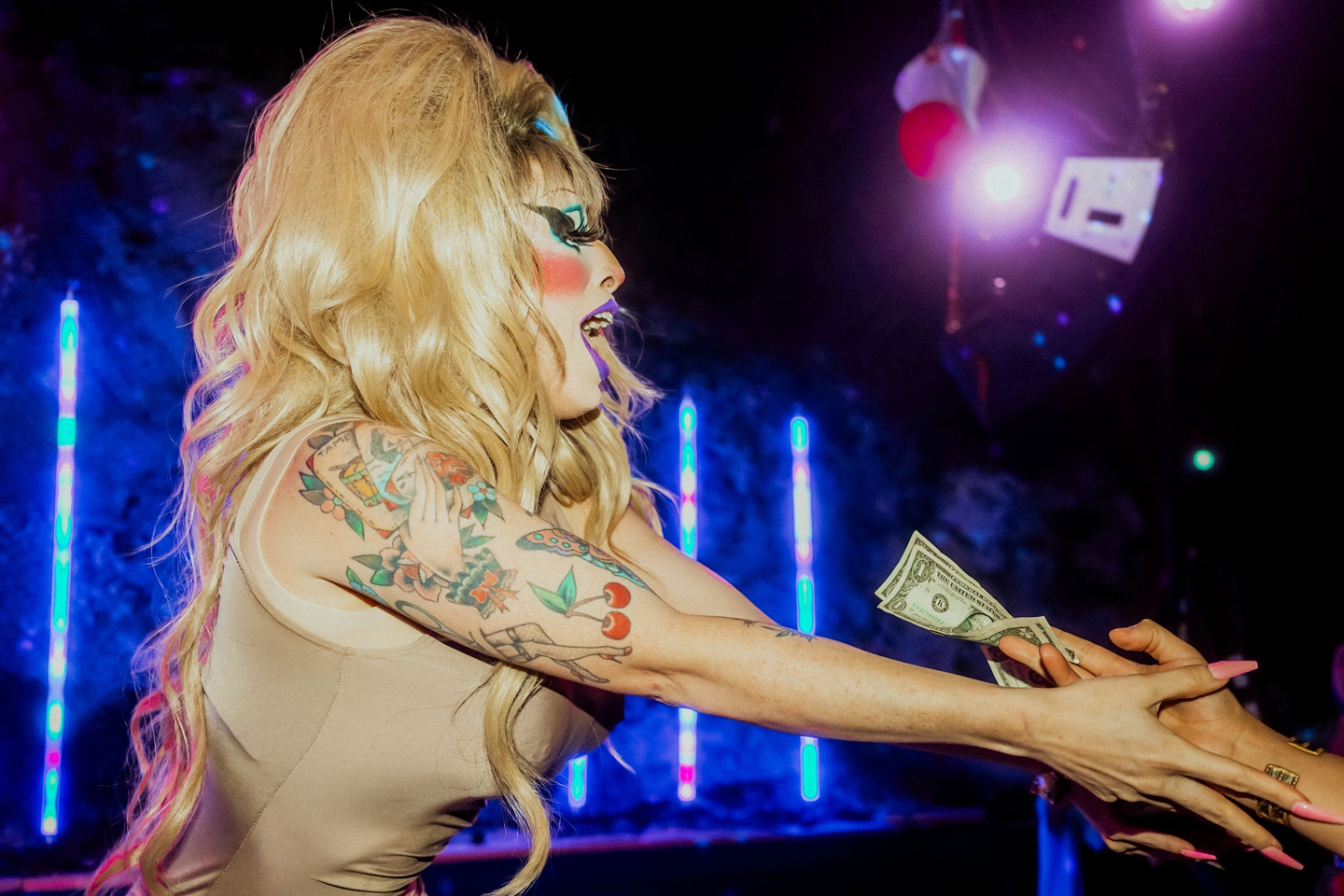
In 2023, Texas lawmakers passed Senate Bill 12, a piece of legislation that was pitched publicly as a drag ban and signed by Governor Greg Abbott amid a national surge in anti-LGBTQ legislation.
“After Governor Abbott signed Senate Bill 12 in June of 2023, he tweeted out that he had banned all drag performances in public in Texas,” Brian Klosterboer, a senior staff attorney with ACLU Texas, explains. “That’s not actually what this law does.”
The text of SB 12 prohibits sexually oriented performances in public or in the presence of minors, using definitions so broad and undefined that they risk sweeping in constitutionally protected expression.
Klosterboer exposes just how broad these definitions are by digging into them. For example, “the definition of nudity includes any brief or partial nudity; any portion of the butt or breasts below the areola is considered nude,” he says.
What the law doesn’t do is ban drag outright. In fact, the recent ruling from the Fifth Circuit Court of Appeals clarified that “all of those all-ages, family-friendly shows are not even possibly impacted by Senate Bill 12,” Klosterboer points out.
Still, the ruling also removed the injunction that had blocked SB 12 from ever taking effect, which means the law could go live as soon as the case returns to the district court.
“Currently, the schedule is that the law would go into effect possibly as early as December 5,” Klosterboer notes. “What that means is that across the state, drag shows could be under more scrutiny.”
Despite this, he stresses that the law remains largely untested and muddied. “It’s so vague. It leaves a lot of things really unclear,” he adds. And that confusion, he believes, is part of the harm. “That’s the chilling effect that we’ve already seen happening.”
Dismantling the Arguments Against Drag
One of the most enduring anti-drag talking points hinges on the belief that drag performances, regardless of the setting, are inherently sexual and sexualized. Most of us know this couldn’t be farther from the truth. However, opponents of drag will claim that performers who appear in adult-oriented shows are unfit to perform in a family-friendly setting.
Brigitte Bandit has little patience for that line of thinking, calling it out with an analogy that exposes how flimsy the argument really is. “Would you take an actor who’s done both a G-rated movie and an R-rated movie and take a clip from the R-rated movie to argue that the G-rated movie is inappropriate for children because it has the same actor?” she asks.
For Bandit, this isn’t a random or hypothetical scenario. It’s her personal and lived experience. “They’ll take photos of me from my adults-only shows, with my tits out and being all crazy, and put it next to a picture of me reading to children and say, ‘This is who’s performing for your kids.’ Okay, well, one of those is literally me in an 18-and-up show.”
Bandit believes this tactic is being promoted to mislead the public and instill fear rather than understanding.
The Fight Ahead
Despite the confusion and fear, Klosterboer is clear about one thing: “Drag itself remains fully legal across Texas. Family-friendly shows are not impacted by this law—or should not be impacted by this law.”
Still, he warns that SB 12 arrives in a moment of extreme backlash for LGBTQ rights across Texas. “It’s going to create a chilling effect, no matter what.”
And that, performers say, is exactly why the fight matters. “We must fight back against very single attack. Every single little attack matters,” says Bandit.
Texas drag shows may be in the crosshairs, but it’s far from being defeated—as Bandit and Violet S’Arbleu, two veteran performers who have been following SB12, explain.
Brigitte Bandit
“A way to scare the public away.”
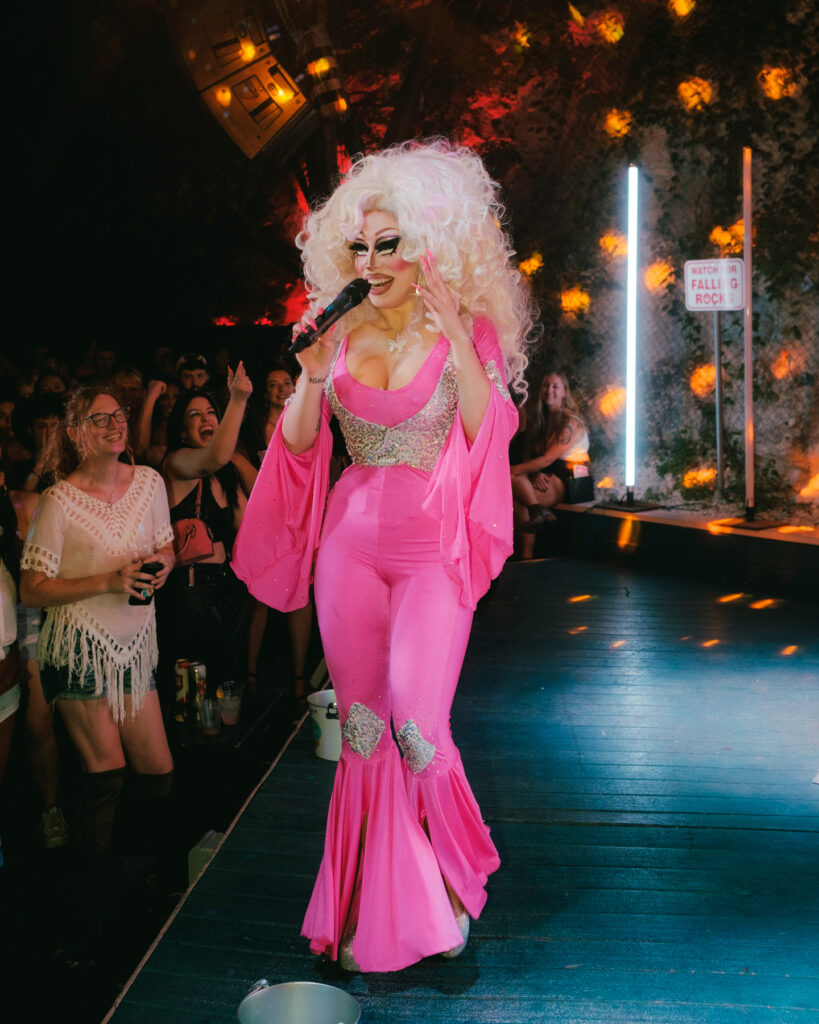
Austin-based drag performer Brigitte Bandit has been fighting SB 12 since the bill’s earliest drafts. “I’ve followed along Senate Bill 12 ever since it was first filed,” she says. She’s even testified in drag at the Capitol. “That testimony made worldwide news. It was crazy,” she recalls.
Her advocacy only escalated as the bill’s language shifted. “They tried to redefine that bill to try to make sexually oriented performances the thing they were using to target drag performers, referencing prosthetics, the things that we wear, and the way that we perform.”
From her perspective as a plaintiff in the ACLU lawsuit against the bill, the goal of SB 12 isn’t legal clarity. It’s actual intimidation. “This is just a way to scare people from supporting us, booking us, and whatnot,” she says. “It’s not really about what it actually says. It’s about the public perception of it.”
She’s already seen the seeds of misguided perception take root. “We had people arguing that drag shows were illegal here in Texas,” she says. “I hate these headlines that are saying ‘Drag Is Banned in Texas.’ No, it’s not!”
And the danger, she warns, goes far beyond drag. “These people who are pushing this legislation see no difference between a drag performer and a trans person,” she explains. “Whenever we let any part of our LGBTQ+ community be attacked, we’re all at risk of being attacked.”
Bandit’s message to performers and venues is simple: “Don’t retreat. Continue to keep doing drag. Every drag venue needs to continue to keep booking drag. Don’t be afraid to support us.”
Violet S’Arbleu
“It was written to do nothing except make a bunch of fuss.”
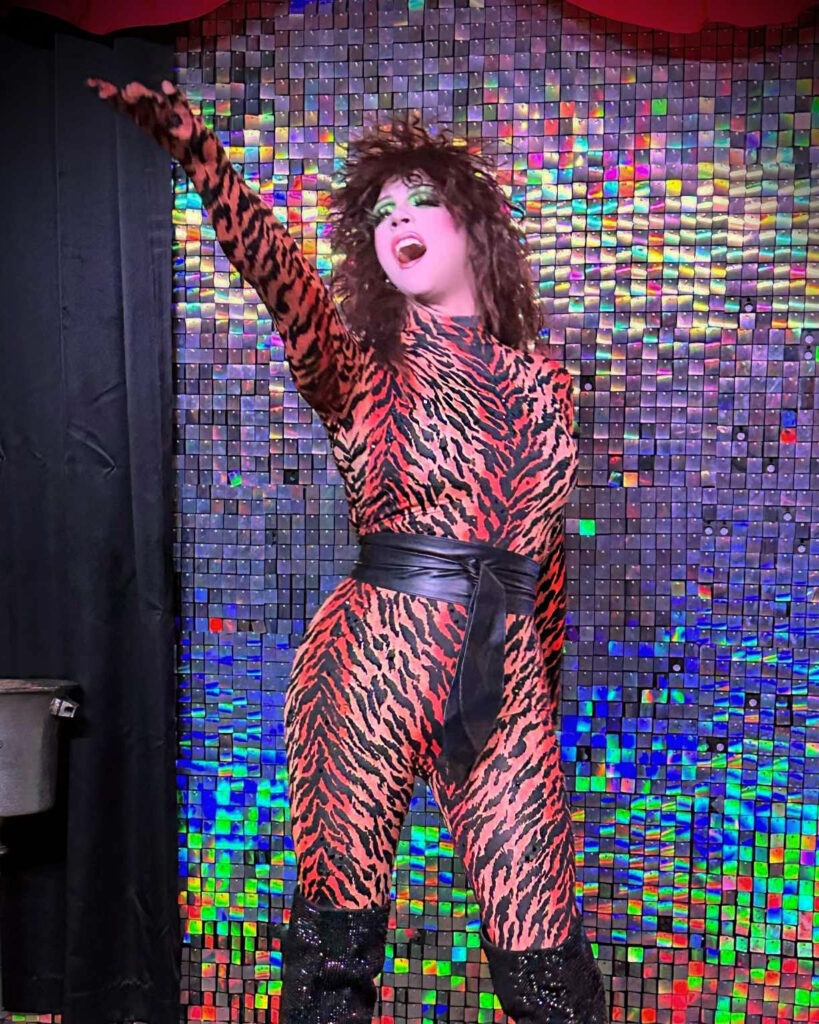
Houston performer Violet S’Arbleu has spent months dissecting the language of SB 12, and what she sees frustrates her. “The majority of the SB12 revisions that I’ve been able to decipher don’t seem to have anything new,” she says. “It seems to be the same vocabulary that was already in it.”
To her, the vagueness isn’t accidental. “I think it is intentionally vague because they want to be able to take a bunch of people to court just so that they can lose.”
To that end, she also believes the bill was crafted to create chaos, and not safety. “All they’re doing is signing into law the idea that parents can make decisions for their children. It’s just ridiculous. There are so many other things in the state that this time and energy could be spent on.”
What SB 12 does do, she warns, is open the door for logistical and legal harassment, from zoning pressures for businesses to permit requirements for individual performers. “Being in a red state doing drag and then having all of our names on a list just seems a little suspect to me,” she says. “I think that’s also potentially part of the point.”
But like Bandit, she sees another outcome brewing: resistance. “If we temporarily have to change the way people interact with drag, I don’t think that a ban is going to succeed. If anything, I think it’ll make drag stronger.”
At the heart of that resistance is community. Drag, she says, “is a form of freedom of speech,” and a more successful resistance could come from all of the young and veteran performers who will be forced to speak out against conservative politics.