
Houston’s Rainbow Crosswalks Erased, but Pride Endures
After Abbott’s order, Houston leaders and residents unite in outrage and defiance.

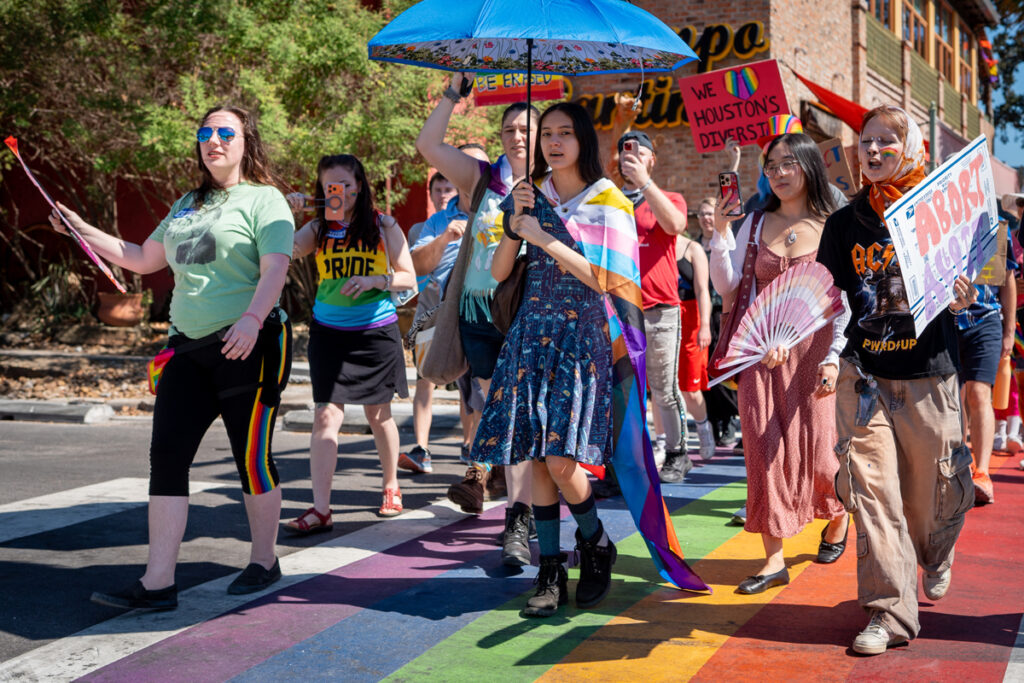
In the still hours before dawn, the rhythmic hiss of power washers filled the Montrose air. As streetlights reflected on wet pavement, the once-vivid bands of red, orange, yellow, green, blue, and purple began to fade under jets of water and chemical solvent. The quartet of rainbow crosswalks at Westheimer and Taft, which had been a beloved symbol of remembrance and visibility, were being stripped away, stroke by stroke, under an order from Governor Greg Abbott. Watching in disbelief, members of Houston’s LGBTQ community gathered on the sidewalks, some in silent grief, others chanting through tears. “They erased our paint, but they will not erase our Pride” was their refrain.
Commissioner Lesley Briones echoes that conviction. “As a proud native Texan who now has the opportunity to serve as one of the Harris County commissioners, I’m deeply saddened, disappointed, and upset,” she says. “Rather than focusing on fixing the electricity grid, on disaster response and recovery, on economic opportunity, on affordability—on all the things that actually matter to people—they’re fixated on our crosswalk. It’s under the pretext of safety, although I would challenge that as simply a pretext. If they were really focused on safety, Texas has some of the most dangerous roads in the country.”
For Briones, the order cut deeper than policy. “It hurt my heart,” she states. “I believe our equality, liberty, and respect are inherently interconnected. When you erase one community, you’re sending a message that anyone’s rights can be next.”
Governor Abbott’s directive, issued in mid-October, ordered the removal of all “non-standardized” crosswalk designs across the state. So rainbow crosswalks, once viewed as benign symbols of Pride and remembrance, suddenly found themselves branded as violations. The claim was “safety,” though Abbott’s administration offered no data to support that. As Briones noted, if safety were truly a concern, the state would be addressing the decades-long record of traffic deaths on Texas highways, and not the paint colors at an intersection.
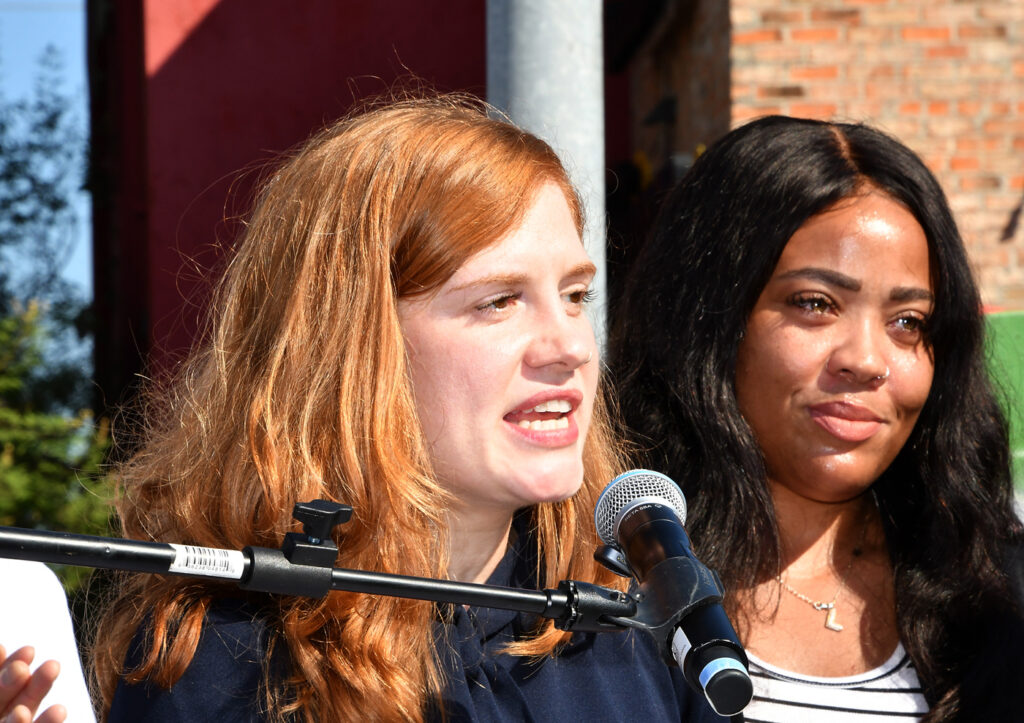
State Senator Molly Cook, who represents the Montrose area, didn’t mince words. “We learned about it when everyone else did, when the governor issued his decree,” she reveals. “Those rainbow crosswalks were put in as a safety measure. For the governor to then claim that he’s removing it for safety is, of course, a lie. It’s censorship. It’s offensive to remove them. It’s a waste of money. It’s shocking, honestly.”
The order “fits squarely within the governor’s obsession with ideology and culture wars,” Cook explains. “His intent is clearly not safety. This is absolutely just a political stunt—a waste of taxpayer dollars,” she continues. “He’s also now traveling around the county saying he’s going to reach into his ungodly war chest and turn Harris County deep red. All of this is happening at the same time.”
Cook notes that in this political environment, even truth and governance have become partisan acts. “It’s not new. The Republican Party certainly is no longer the party of small government. We’ve seen the erosion of our local control, but even more than that, the ability of localities to serve diverse populations. This insistence on restricting local governments’ ability to collect revenue while sending down unfunded mandates is punishing cities like Houston and Harris County for being progressive and inclusive.”
To City officials, the crosswalk removal was not just a symbolic loss. It was a direct assault on local authority. Council Member Abbie Kamin, who represents Montrose, described her immediate reaction in one word: “Shameful.”
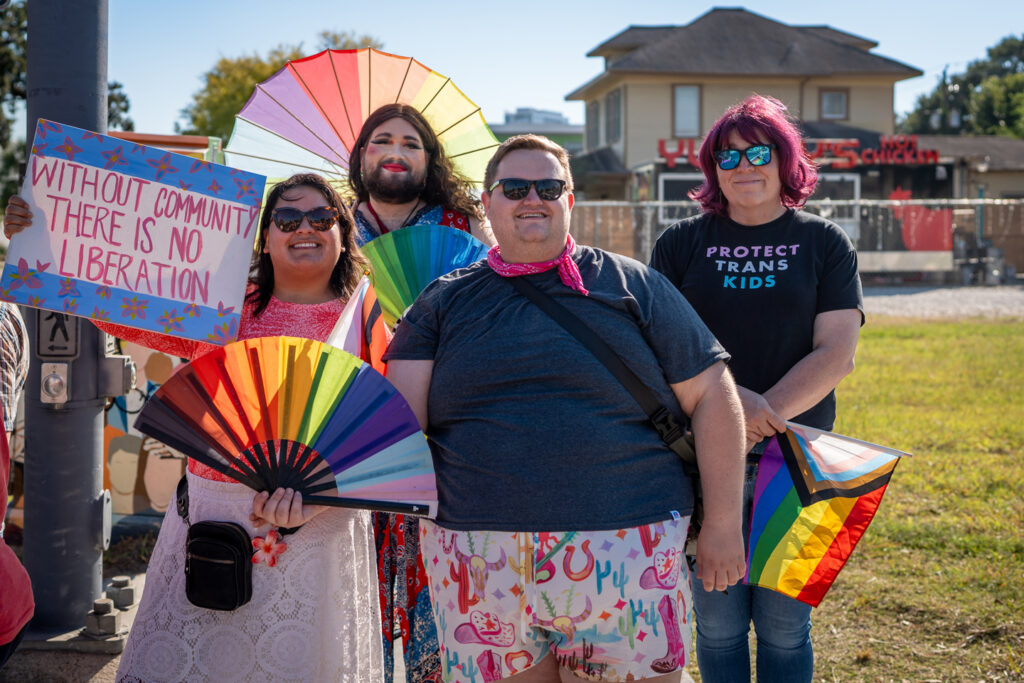
“It’s shameful and cowardly,” Kamin says. “Unlike other cities who are taking a stand, we are capitulating.” While she could not confirm the extent of the city’s prior communication with METRO, Kamin said council members “were told they would be notified prior to the removal so that we could support the community during this difficult time and make sure that there was transparency in the process.”
Instead, the removal came abruptly, and was followed by the arrests of the early-morning protesters who gathered in opposition. Kamin was one of the officials who worked to ensure those charges were dropped. “We will continue to make sure that we’re doing everything we can to stand up and protect our community,” she adds. “We will not stop pushing back.”
When asked if the City could have done more to protect the crosswalks, Kamin didn’t hesitate. “Absolutely. Other cities are taking steps to not only protect their crosswalks, but to protect local rights and local control,” she explains. “If this keeps up, local control is not going to exist here.”
Council Member Mario Castillo, Houston’s only openly LGBTQ member of City Council, shared Kamin’s outrage. “While it wasn’t in my district, I take this seriously because I want the community to know that they have someone they can go to if they ever need support. To see one of our memorials come under scrutiny, and then demand that it be removed, I take that seriously as well. Visibility matters. To see it come under attack is very disheartening.
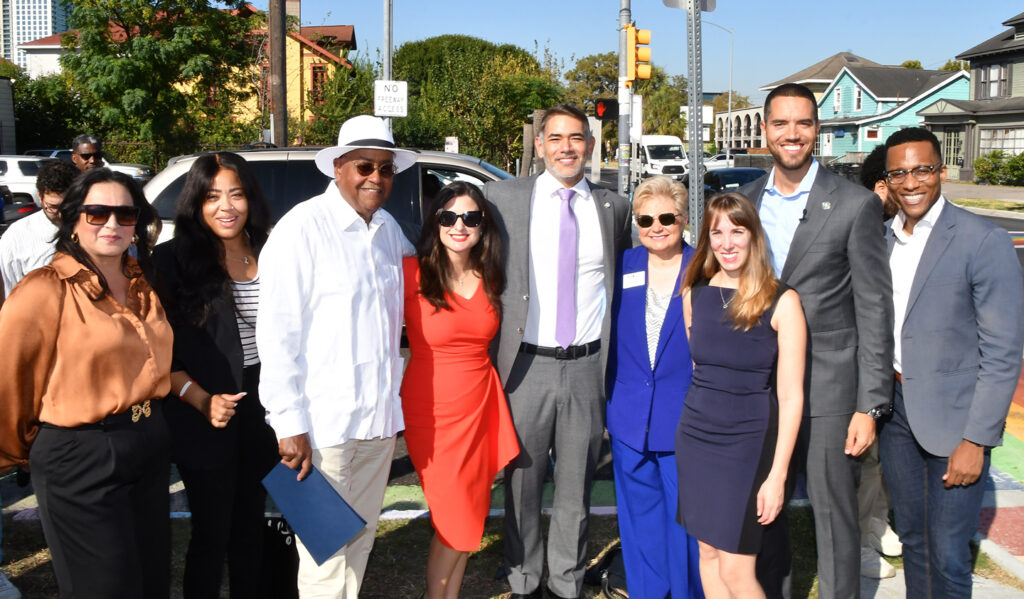
“Look at what could come next,” Castillo continues. “Look at what groups could be targeted next. Now that we have State leadership emboldened and targeting different groups of Texans, it’s a horrible precedent. These are our elected leaders, and they’re coming after the people they represent.”
He adds that the crosswalk’s removal underscores the importance of continued civic engagement. “We can’t afford to disengage,” Castillo emphasizes. “Every time we show up, whether at Council meetings, at rallies, or at the ballot box, we remind them that we’re not going anywhere.”
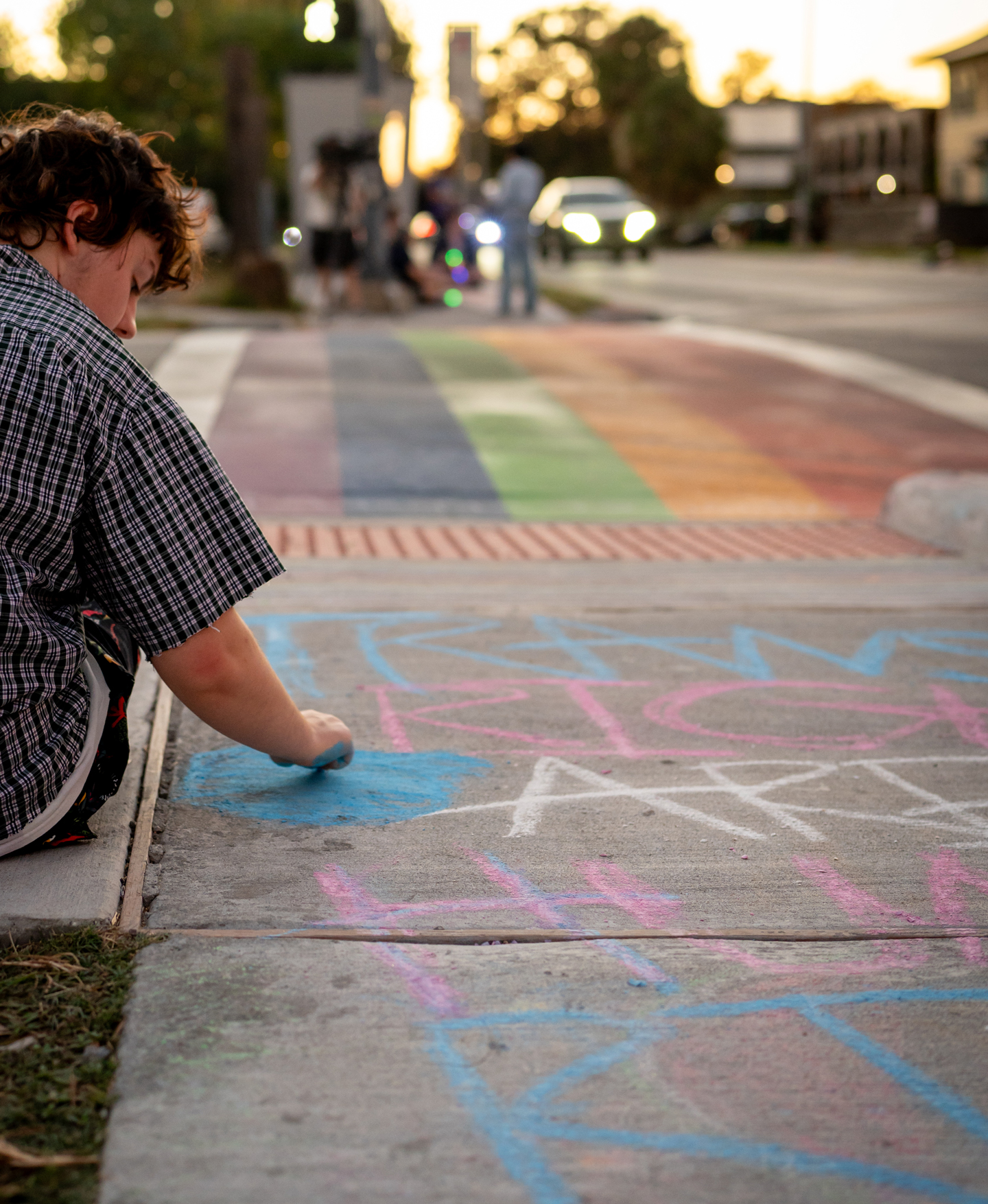
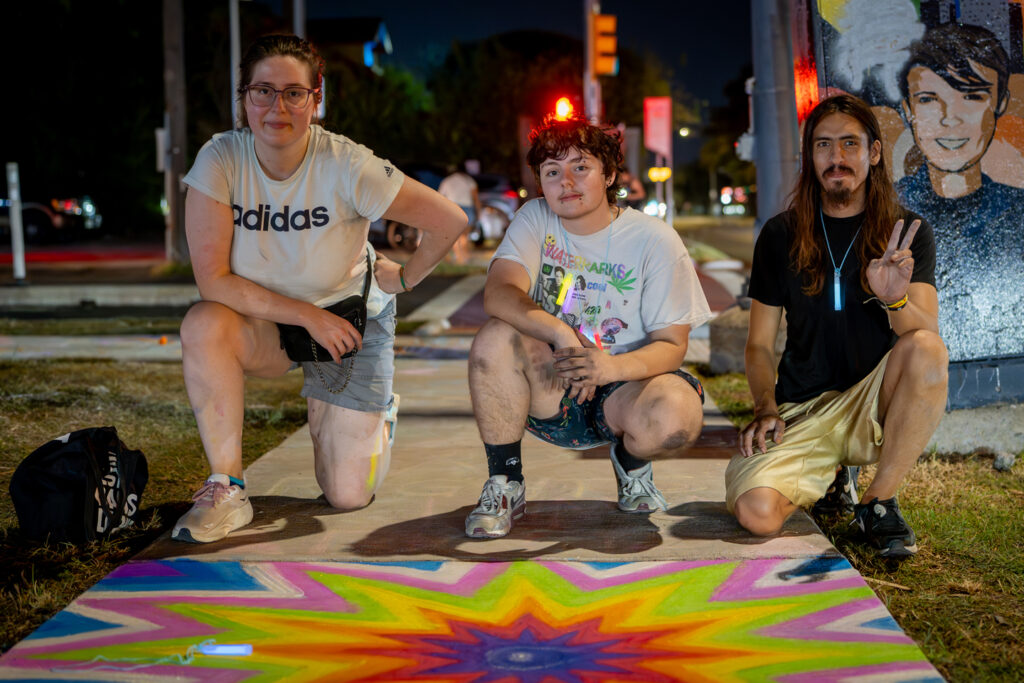
In the wake of the crosswalk removal, Houston’s LGBTQ community has mobilized. Chalk rainbows and other symbols of inclusion appeared overnight across Montrose sidewalks. Messages like “You Can’t Erase Pride” and “Still Here. Still Queer.” were scrawled on pavement as signs of the community’s continued strength, resilience, and solidarity. For those who protested, it wasn’t just about art. It was about being truly seen.
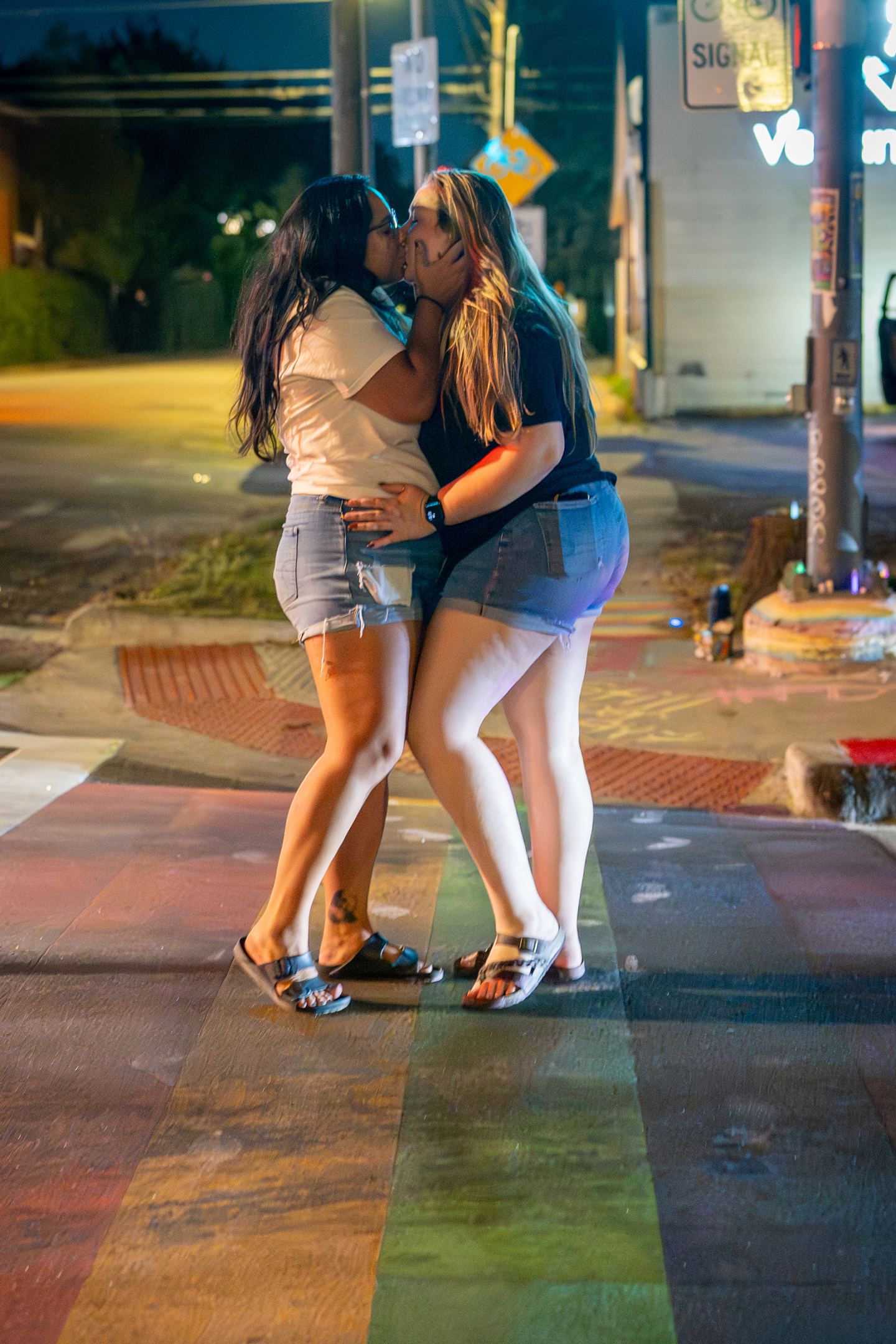
That grassroots energy gives Briones hope. “It reinforces my conviction. It’s the power of the people that is the change. Harnessing our collective community voices—that’s what’s going to create a better tomorrow.”
Dr. Blake Ellis, the chief talent and communications officer for Harris County Precinct 4, viewed the moment through a historian’s lens. “From this most recent crosswalk controversy, especially if you go and read the comments online, it’s clear there are still a lot of Texans who don’t understand our community,” Ellis points out. “Many of the fights that we thought were settled are now back on the table. Everyone needs to become an activist. Everyone needs to understand something about LGBTQ+ history, and everyone needs to embrace the word that drove our movement early on: visibility.”
Ellis sees Houston and Harris County as being on the front lines of the fight for democracy. “We are bigger than 26 states,” he explains. “When we take a stand, it resonates. We are making progress in the context of a state government that is firmly committed to pretending that the LGBTQ+ community does not exist. So when we celebrate, when we fight back, when we take a stand, it matters.”
He’s quick to remind Houstonians that the struggle for equality is cyclical. “It’s never linear,” he mentions. “We move forward, we’re pushed back, we rise again. That’s the history of our movement. We can’t afford to think of any victory as permanent. We have to protect it every single day.
“If there are any kids reading this, please know that no matter what the governor of Texas says or does, you can come to Houston, Texas and you will find a welcoming community. You will find elected leaders not just celebrating you, but fighting for your rights and your dignity,” Ellis adds. “There is hope on the other side of what you may be dealing with. You’ve just got to get to Houston and Harris County.”
From the Capitol to City Hall, officials like Cook and Briones understand the fight isn’t just about one intersection. “It’s part and parcel,” Cook says. “We just see relentless attacks with absolutely no data behind them. The goal is not safety. The goal is to scapegoat vulnerable communities and posture for the next election.”
“When you elect people who are discriminatory in nature, this is what happens,” Briones agrees. “When you elect people who champion equality, then you get very different outcomes. I hope that those who are angry, sad, and disappointed will put that into action as community voices, as community leaders, and—at the end of the day—vote.”
As outrage turns into organizing, Houston’s local officials are seeking ways to transform loss into opportunity. “This may be a setback, but it’s not the end,” notes Castillo. “We’re going to continue to figure out ways that we can support the LGBTQ+ community. I’m committed to that. The mayor has stated his commitment, as well. We will continue to fight back. We will continue to support the folks that make our city great.”
The City’s creation of an LGBTQ+ Economic Empowerment Coordinator position, announced just days after the removal of the rainbows, underscores that commitment. Castillo also revealed that there are also discussions about a Montrose heritage district “that would allow for memorials and monuments to be placed across the neighborhood.” The initiatives, he said, represent Houston’s longstanding tradition of turning resistance into renewal. “We’re resilient,” he declares. “We’ve been attacked before, and every time we’ve come back stronger.”
Briones also emphasizes tangible County action. “We started the LGBTQIA+ Commission for Harris County in 2023,” she adds. “We have volunteer experts, leaders, and activists giving us actionable recommendations on how to make Harris County even more inclusive.” She also pointed to valuable initiatives like LGBTQ liaisons in the sheriff’s office, as well as inclusive law-enforcement training. “Representation matters,” she explains. “Approximately 22% of the individuals I’ve appointed to serve in my precinct have been a part of our LGBTQIA+ community.”
For Senator Cook, the fight is both personal and political. “You cannot kill queer joy, certainly not in Montrose,” she affirms. “I’m so proud of the people who are refusing to be erased, who are refusing to accept this and saying, ‘We’re going to put a rainbow everywhere we can.’ Feel your feelings, get up tomorrow, and think about what you’re going to do to keep our community moving forward.”
“Joy is a fine initial act of resistance,” Ellis reminds us. “But we must also act collectively. Hold on to your hope, because if you still have that, they haven’t won yet.”
As dawn breaks over Montrose these days, chalk rainbows bloom across the intersection where the paint was stripped away. The color fades with each rainfall, but the message endures: You can scrub the streets, you can silence the symbols, but Houston’s Pride, resilience, and collective heart remain indelible. And the whole nation is finding inspiration in that heart as this drama continues to unfold.