
Manhood Investigates the Business of Male Enhancement
Documentary examines girth enhancement and the fragile economics of masculinity.
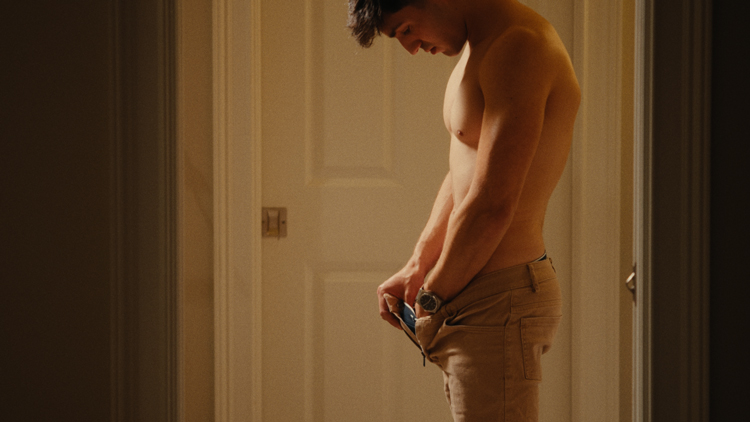
Manhood, debuting at this year’s South by Southwest Festival, is an intimate examination around the rising “girth enhancement” phenomenon. Daniel Lombroso’s second documentary feature follows three protagonists: Bill Moore, a Dallas-based sexual cosmetic entrepreneur; Ruben, a dad of five who continues to get costly penile injections; and David, a patient who is trying to find his path back to contentment post-augmentation after a botched first procedure.
For Lombroso, the subject of male silicone injections wasn’t exactly the obvious next step. With a background as a journalist for The New Yorker and previous documentaries about neo-Nazis and the current state of Southern Baptists, Manhood may come across as a non sequitur to the weighted investigations that shaped his early career. “I definitely have a fascination with sad men,” joked Lombroso, as he connects the dots between these subjects. “I’m interested in the inner motor of people, oftentimes that I disagree with.” Each of his films is deeply human, grounded in an understanding of the subjects without overextending grace where real harm has occurred.
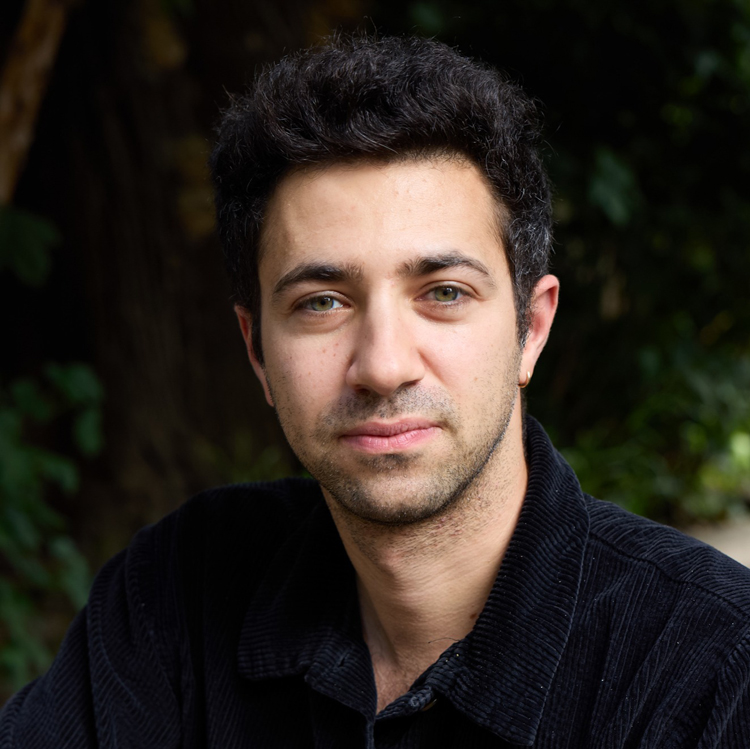
The idea for the film came naturally, with an attempt to find a central metaphor that could encapsulate the fragile masculinities that now comprise so much media, from Joe Rogan to many Twitch streamers. “I was reading all the headlines about the male loneliness epidemic, men doing leg lengthening and flying to Turkey for hair transplants, and to be honest, a lot of it felt derivative and oversaturated. But when I heard about girth enhancement, the symbolism of the penis felt so special and different and punchy. It’s way more powerful than making a film about a hair transplant.”
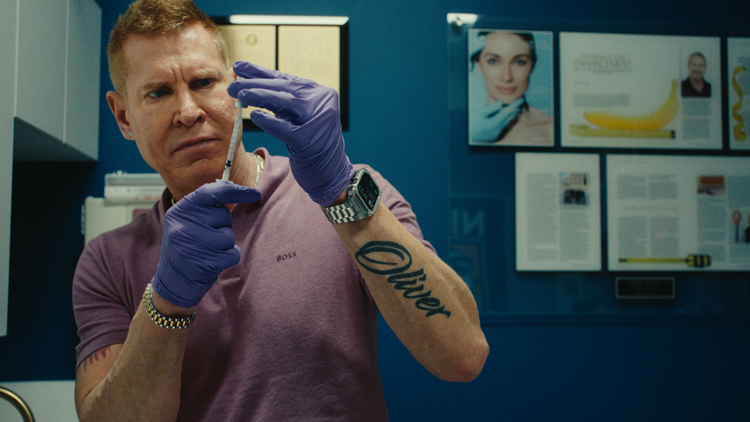
What began as a mild curiosity grew into a full project once Lombroso realized the scope and economic impact of this industry. “I thought it was an important piece of journalism. I started interviewing many different penis practitioners and eventually met Bill Moore, who’s this larger-than-life character.” There’s no better way to describe Moore, a gay businessman operating a medspa-like center from a strip mall off of Highway 75. An avid fan of cosmetic surgeries himself, Bill sees his services as ways to help boost men’s confidence in their relationships, careers, and self-worth.
For such an intimate procedure, getting subjects to participate was surprisingly straightforward. “I booked a one-way ticket to Dallas, went to [Moore’s] clinic, would just wait in the waiting room, and would introduce myself to the different girth enhancement patients and [hear] their stories.” The right subjects were key in understanding the psychology, economy, and desires around this sort of optional cosmetic procedure, yet they could never set the film’s terms. “I come from journalism, and it’s important that I control the story, not them. I always make clear the risks to my protagonists. Like, people will see you naked. Your family knows you one way, now they’ll know you a different way.”
This warning didn’t deter many from sharing their stories with the filmmaker. All sorts of people come through the clinic, with a primarily straight clientele but a not-insignificant percentage gay. There were border patrol officers, fathers, and even a megachurch pastor getting his penis enlarged. Many were conservative, but there was no universal factor that brought them all into the clinic.
One particular subject offered the downtrodden loneliness that Lombroso was first interested in capturing. “Ruben was the most compelling to me of those candidates because Ruben is in a happy relationship and has five children. He’s the last person that you would expect to get a girth enhancement. But he’s taking in this right-wing social media all day that makes him feel inadequate. And that he was willing to be open, which felt so special.”
Ruben is the perfect example for a myriad of moments revealed in the film, but primarily because he keeps saying his wife loves the “enhancement” but just won’t admit it. This gap in communication and assumption about what his partner wants underscores many of the desires of the men coming into this clinic, hoping that a few more CCs of silicone will give them a renewed confidence in a societal order.
The third protagonist, David, came into the project later. First introduced to the filmmakers through Moore as a friend/boyfriend, he only opened up about his history as a patient after months of building trust. Even then, he was almost digitally altered to hide his identity. “We actually originally agreed to use AI to change his face, and the movie is so much about shame that we thought it would work.” Ultimately, David reached a point when he felt comfortable sharing his story as himself after reconnecting with family.
Much of the film examines shame, pinpointing the direct costs men would go through in order to gain a larger sense of confidence. Implicitly, it also spotlights how much male enhancement providers would take from clients with the promise of renewed masculinity. There’s an inherent sadness within this push and pull, platforming moments of sacrifice or exploitation, all for temporary injections that cost thousands of dollars. But Lombroso manages to weave in humor, partially through the nature of the subject but also in a few “stranger than fiction” episodes. While many of the subjects may feel a sense of melancholy over their situations (financial, procedures gone wrong, strained relationships, etc.), none would describe their life situation as sad. This duality maintains dignity.
Many of those getting enlargements had trauma, often from childhood, and saw this as a way to help regain some sort of control. And while insecurity may be an obvious motivator, the decision to have a procedure mostly never had anything to do with sexual performance specifically. “In a way, [these men] are opening up to me for the first time. A lot of them have never spoken to anyone, but then, weirdly, are comfortable with a queer practitioner holding their penis and a Jewish filmmaker from New York City in a strip mall in Dallas. For many, it’s their first time ever talking about their feelings.”
Manhood has to walk a thin line of responsibility, providing fair assessments to the providers, the patients, and those who have experienced harmful impacts. Some in the documentary received permanent silicone injections, causing damage to the area and requiring medical attention. Some who undergo the procedure semi-regularly (the lifespan of the non-permanent injection is a year) are in debt and have dependents, while providers own boats and expand their medspa empires. With his journalistic background, Lombroso is able to maintain a sense of neutral reporting that’s key in under-reported arenas such as this. “I feel like the voice for the audience. I really try to be on the emotional journey of the audience and be just ahead of them. There’s a lot of pressure on documentary filmmakers to make a statement, but sometimes less is more.”
Trying to get funding and support for a documentary featuring so much full frontal male nudity was a challenge, but the right people showed up to support the project. “The male executives that we’re pitching felt very uncomfortable with seeing penises and talking about penis size. It was really women and queer men who understood it. It would usually get to the straight male exec at the top, and they would block it.”
It just took the right team to understand Lombroso’s vision. One notable partner that viewers might recognize during the opening credits is World of Wonder, the production company behind RuPaul’s Drag Race. Besides providing funding, they kept the perspective in check, ensuring the dual tone of humor and seriousness was maintained. “I come from a much darker filmmaking sensibility. World of Wonder really helped bring in some tenderness and humor.”
The result is an intricate and touching appraisal of the economy of masculinities. Lombroso’s journalistic integrity remains intact throughout, allowing the viewer to make their own interpretation of this growing industry. Manhood doesn’t make the argument that men shouldn’t get this procedure or that all displays of toxic masculinity would stop if men discussed their feelings instead of spending $4,000 per injection into their penis, but it adeptly examines moments where men are able to find solace through their emotions and not cosmetics alone. And if men in Dallas could do this, anyone could.
South by Southwest (SXSW), one of Austin’s premier festivals, returns with its 40th iteration March 12–18, with sections for music, technology, VR, TV, and film. For more information, visit sxsw.com/