

Real Women Have Curves Brings Heart to the Alley
Brenda Palestina finds joy and connection in Ana.

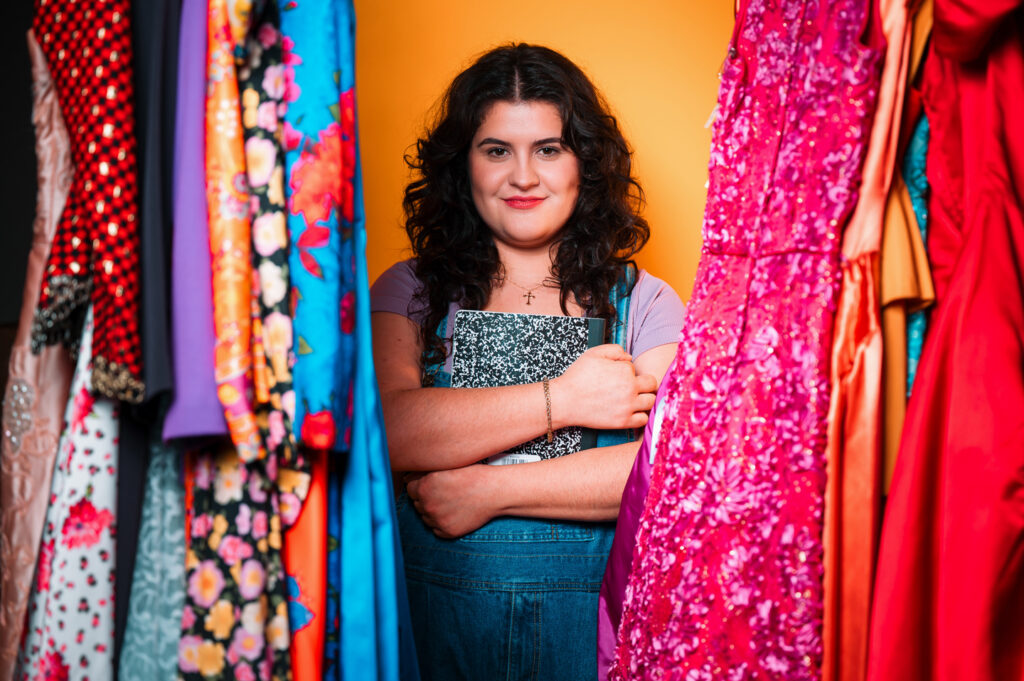
When the Alley Theatre opens Real Women Have Curves this month, audiences will encounter a story that feels both fiercely specific and urgently universal. At its center is Ana, a young Chicana woman from East Los Angeles navigating ambition, family expectation, body politics, and liberation. Playing Ana is Houston-based and openly lesbian actress Brenda Palestina, whose connection to the role is deeply personal.
“For me, a lot of the appeal was the play itself,” Palestina says. “But the topic of immigration, just really being unapologetic and honest, was really important to me and really touching when I read the play. More than anything, this is an immigration story about women in East LA.”
As a first-generation Latina with immigrant family members, Palestina sees the production as more than a revival. It’s a form of representation that feels especially necessary right now. “Most of my family are immigrants,” she reveals. “I feel really honored to be able to tell stories that I think are representative of my family, of my friends, and of my people. That’s really quite an honor.”
Palestina is also clear about how her queer identity informs her artistic choices. “I am queer. I’m a lesbian,” she says with tangible pride. “And while this isn’t necessarily a queer story, this is a story about sexuality and women taking ownership of that, as well. So when I’m thinking of what projects I’m interested in, anything that feels representative of those identities is really going to call to me.”
That sense of authenticity is central to what drew her to Ana. “She starts the play thinking that she knows everything about feminism and everything about liberation,” Palestina says. “I really relate to that, and I see a younger me in that.” What resonates even more, she explains, is Ana’s growth. “She’s quickly humbled and is being schooled inadvertently by these immigrant women around her. All of my best and most important lessons have come from the older women in my life.”
Ana’s ambition also mirrors Palestina’s. “I’ve always been an ambitious person, and I’ve always wanted more and desired greatness,” she says. “And I think Ana is the same way. She wants more. She wants to explore the world. She wants to write.”
The play’s continued relevance feels especially potent in today’s political climate. “It gets me a little emotional to think about seeing undocumented immigrants on stage,” Palestina says with tears forming in her eyes. “Right now, there’s a resurgence of immigrants hiding, of brown people and Latino people being really scared to just leave their homes.”
“The humanization of immigrants at this time has to happen, and it has to happen loudly, and on the biggest stage in Houston,” she says, emphasizing why this visibility matters right now.
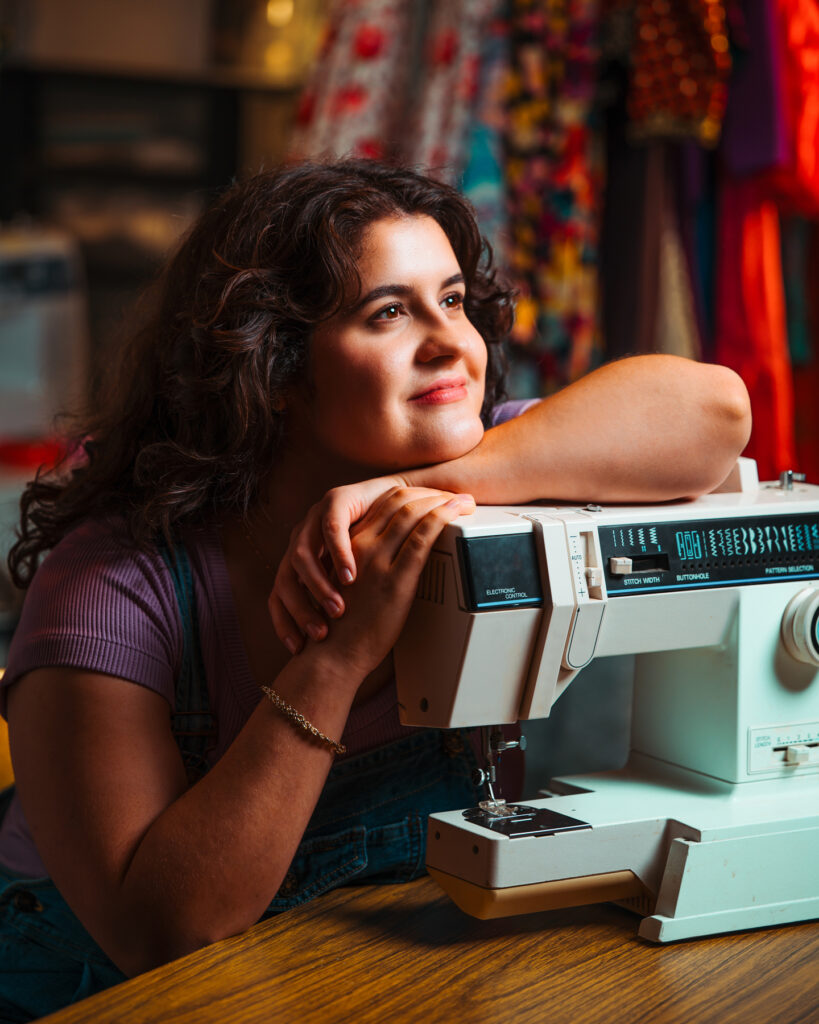
Real Women Have Curves is also famously unapologetic about bodies—a theme that Palestina has been deeply affected by. “When I first read the script and I saw that everyone does get naked at the end, I thought, ‘Me? In my undies?’” she laughs. But that initial hesitation gave way to empowerment. “Ana is using her body as it exists to fight the patriarchy, and I think that is really wonderful and really inspiring to me.”
Palestina also acknowledges that the title Real Women Have Curves can prompt hesitation, so she invites audiences to sit with that discomfort rather than turn away. “Before I had really known what the story was, I definitely shared those concerns. What the play ultimately offers, she explains, is specificity rather than exclusion. “This is a story about a very unique niche experience. These are women in East LA. It’s not meant to encapsulate all women.” Yet, the word curves, she adds, reaches beyond the physical. Drawing on a metaphor shared by playwright Josefina López, Palestina describes it as “this curvy feminine energy” and “the feminine energy of being soft,” noting that “women and, frankly, anyone who exists outside of the gender binary, don’t have these rigid lines.”
Language and cultural shorthand are other layers of identity the production embraces. “Any time I am in a space with Latinos, there’s a comfort level and familiarity immediately,” Palestina admits. “It says there’s going to be a level of care here that is specific to me and my identity.”
That care extends behind the scenes, as well. “This play works when we see women play,” she recalls playwright Josefina López saying in an early production meeting. “The frequency of joy negates, cancels, leaves no room for the frequency of shame.” Palestina feels that joy daily in rehearsals. “There’s already this really great sense of camaraderie and bonding. There’s a lot of joy between me and the other cast members.”
For queer audiences, first-generation viewers, and young Latinas in particular, Palestina hopes the production lands as a love letter. “I hope that they feel represented,” she says. “I hope that they feel that their identities were taken care of with the utmost care and intentionality and tenderness.” And beyond representation, she hopes the play sparks action. “As Ana says, we have the right to assert ourselves, and we have the right to take control of our own bodies and our lives.”
Join OutSmart starting at 6:30 p.m. on Thursday, February 5, for ActOUT, a pre-show reception for the LGBTQ community and allies, with music, socializing, and complimentary cocktails and appetizers.
What: Real Women Have Curves
When: January 23–February 15, 2026; ActOUT reception February 5
Where: Alley Theatre, 615 Texas Avenue
Info: tinyurl.com/mu6hasr5