
Prostate Cancer Awareness Month Underscores Need for Inclusive, Affirming Care
Screening, treatment, and support must address diverse patient needs.


Each September marks Prostate Cancer Awareness Month. Approximately 1 in 8 men will be diagnosed with prostate cancer at some point in their lives. Prostate cancer is a significant health concern, representing the second leading cause of cancer deaths in men.
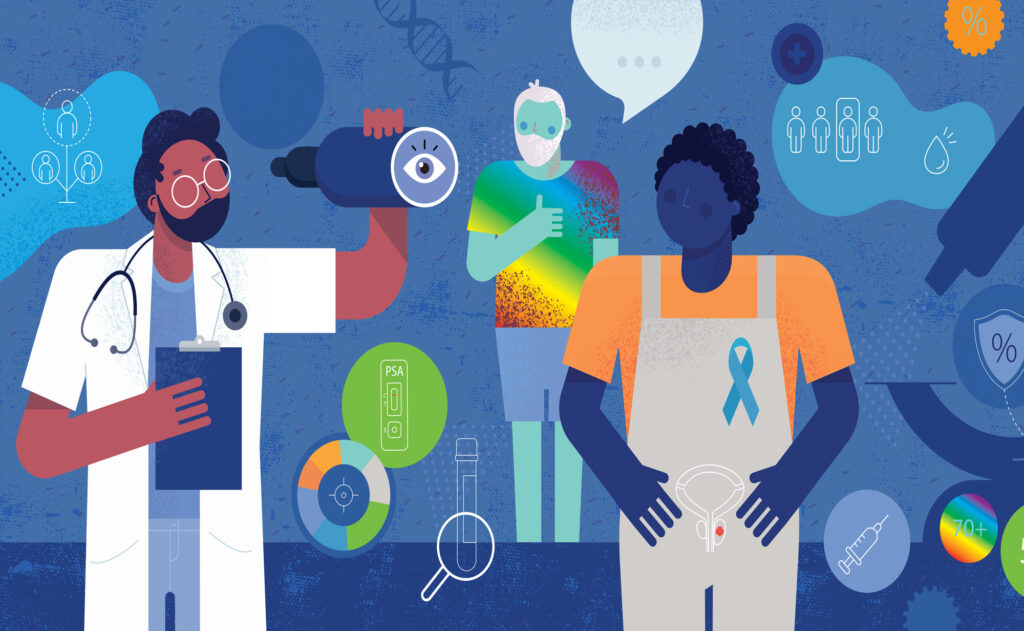
While treatment can bring challenges such as changes in sexual health or urinary control, understanding options and connecting with support systems makes a critical difference. The needs of gay and bisexual men and transgender women may differ from heterosexual cisgender men, underscoring the importance of affirming, inclusive care.
Screening usually begins with a PSA (prostate-specific antigen) blood test. Results from 0.0 to 3.9 are considered typical, while a score of 4.0 or higher often leads to further testing, such as a digital rectal exam, ultrasound, or MRI. A biopsy remains the gold standard for diagnosis.
Risk varies. African American men are advised to begin PSA testing at 40—or at 35 if they have a family history of prostate cancer. Anyone with two or more close relatives diagnosed before 65 should also start at 40. Beginning at 45, screening is recommended for all.
The Prostate and Its Complications
Althought the prostate is only the size of a walnut, it plays an outsized role: producing seminal fluid, helping propel sperm during orgasm, and regulating urine flow.
A similar structure exists in women, called the Skene’s glands, but it isn’t prone to cancer. Trans women retain their prostate, and while hormone therapy can shrink it, the cancer risk remains.
One of the challenges with prostate cancer is that symptoms often appear late. Warning signs can include trouble urinating, weak flow, frequent nighttime trips to the bathroom, blood in urine or semen, erectile dysfunction, pelvic or back pain, fatigue, and unexplained weight loss.
Treatment depends on the stage and aggressiveness of the cancer. Options range from active surveillance for slow-growing cases to surgery, radiation, brachytherapy, hormone therapy, chemotherapy, or experimental treatments. Some of the newest therapies are easier to access overseas than in the U.S.
Treatment Disparities
Most prostate cancer research has focused on heterosexual men, making disparities in care for gay men harder to track. Still, available studies suggest important gaps remain in how treatment and support are delivered. In some cases, a physician’s cultural or religious biases can affect the quality of care that gay patients receive.
Beyond medical treatment, prostate cancer survivors often face emotional challenges. Many physicians may not fully understand the sexual practices common among gay men, or the profound impact prostate removal can have on intimacy. Post-surgical support groups are typically geared toward straight men and their wives, leaving the specific emotional needs of gay men overlooked. As a result, many survivors are left without affirming spaces to process their experiences.
Issues that Face Gay Men
In 2011, Dr. David Latini of Baylor College of Medicine studied 92 gay men with prostate cancer and identified key post-surgical challenges.
Some reported difficulty maintaining erections, with medications offering only limited help. Many had to rethink how they expressed intimacy and defined themselves sexually. Others noted reduced physical sensation or the absence of ejaculation, which can affect closeness with a partner.
Coping varied. Men in committed relationships often adapted with supportive partners, while single men faced the added challenge of explaining these changes when dating.
Latini’s research also revealed resilience. With open communication, supportive partners, affirming providers, and even counseling, many men discovered new ways to experience intimacy and connection. His findings underscore that while prostate cancer changes the body, it doesn’t end the possibility of a fulfilling sex life or meaningful relationships.
Virtual Support for Gay Men with Cancer
David Horn and Todd Koser co-moderate a rare virtual support group for gay men with prostate cancer, offered through the ZERO Prostate Cancer organization. Both survivors themselves, Horn lives near Seattle and Koser in Philadelphia.
The group meets twice a month, drawing about 25 participants from across the country. “We actively make room for new folks to talk,” Koser says. “It’s common for them to arrive with lots of questions.”
“There are many men our age who are cut off from family or live isolated lives,” Horn adds. “Even those with support often aren’t talking to people who truly understand. Hearing from men further along in their journey helps participants imagine a future for themselves.”
Top concerns include sexual side effects, urinary leakage, and occasional homophobia from physicians, especially in smaller communities. “In our group, men can talk openly about treatment side effects and the emotional impact,” Horn says.
Newly diagnosed participants often seek perspective on surgery, radiation, or other therapies. “We don’t give medical advice,” Horn notes. “But men share why they chose a treatment and what they experienced.”
Dating can add another layer of stress, Koser says. “Coming out as a survivor can be a source of anxiety. Although rare, some partners have left relationships after a diagnosis. Others return after treatment saying things were good for a while, and then they weren’t anymore.”
Sometimes, the online meetings even lead to in-person gatherings for members in the same area, creating a hybrid support system.
Research
Dr. David Latini says reliable data on gay men and prostate cancer remains scarce. The Veterans Administration Health System added a sexual orientation marker to patient profiles years ago, but “given the climate in Washington these days, there’s no way the VA would ever publish a paper using that data,” he notes.
Achieving equity in prostate cancer care requires a real commitment to addressing disparities in both clinics and research. Everyone—straight, gay, bisexual, or transgender—deserves compassionate care, respect, and hope for the future.
Support Groups
Support groups for gay men with prostate cancer are rare. There are three virtual groups that meet via Zoom. There is no cost to join any of the following groups:
- The ZERO Prostate Cancer organization offers a support group on the first and third Sundays of each month, 12:00 noon–1:30 p.m. Houston time. To register for this group, contact Terri Likowski at terri@zerocancer.org. One can also request to be added to their email list.
- The Smith Center offers a support group on the fourth Thursday of each month, 6:00–7:30 p.m. Houston time. The group is conducted in English. A second group, conducted in Spanish, is offered on the first Monday of each month, 12:30–2:00 p.m. Houston time. To register for either group, email programs@smithcenter.org.
Online Resources
- Zero Prostate Cancer’s LGBTQ Resources
tinyurl.com/3j2knraf - Gay, Bisexual Men & Transgender Women Prostate Cancer Support Facebook Group
tinyurl.com/37vr45pv - A Transgender Woman Talks about Prostate Cancer
tinyurl.com/7u7dyafj