
They never left Pulse behind. They just learned to carry it differently.
In 2016, a gunman killed 49 people and wounded dozens more at a pillar of Orlando’s gay nightlife. Ten years later, the tragedy reverberates.

This story was originally reported by Brooke Migdon of The 19th. Meet Brooke and read more of their reporting on gender, politics and policy.
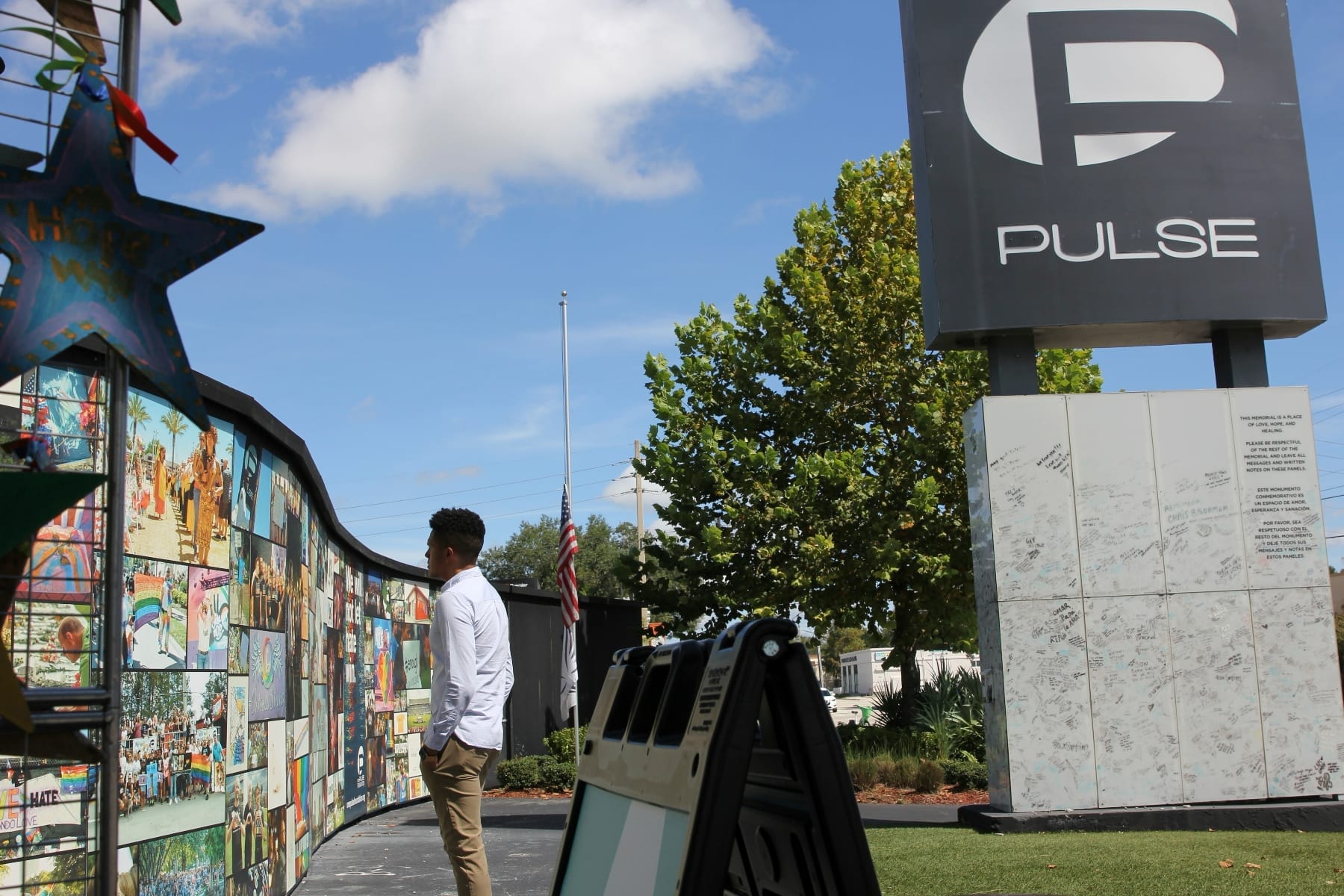
Ten years ago Friday, a man armed with a semi-automatic rifle and semi-automatic pistol opened fire at Pulse nightclub in Orlando, Florida. He killed 49 people and wounded dozens more in what was at the time the deadliest terrorist attack on U.S. soil since 9/11.
The shooting at Pulse, an LGBTQ+ bar and dance club that had for years been a pillar of gay nightlife in Central Florida, reverberated throughout the state and country and altered the course of countless lives. Ten years on, survivors and those close to the tragedy are still finding ways to heal. For some, it has meant new paths — in work for LGBTQ+ equality, in helping victims of mass shootings, in politics.
Brandon Wolf had moved to Florida in 2008. At the time of the shooting, he was 27 and working as a store manager at a local Starbucks, with aspirations to someday get to the company’s corporate offices in Seattle. He felt he had achieved a sense of normalcy that he thought wasn’t available to queer people.
“I think I was content to just ride that ‘normal’ off into retirement,” he said. “And then Pulse happened, and my perspective on what matters changed. The urgency with which I want to share love and gratitude to the people around me changed, and, ultimately, my sense of purpose in the world changed too.”
Wolf managed to escape the building unscathed. But he lost two friends in the early hours of June 12, 2016: Christopher “Drew” Leinonen and Juan Ramon Guerrero, who had been in a relationship and living together for nearly two years.
In the days and weeks that followed, Wolf watched the city rally around its own. Thousands lined up to donate blood to survivors fighting to stay alive, and Equality Florida, a state LGBTQ+ rights group, raised more than $7 million for victims and their families.
Wolf became an active volunteer with the organization, spending so much of his free time there that its executive director eventually offered him a paid position. He left Starbucks in 2019, three years after Pulse, to join Equality Florida as its first-ever press secretary.
“So much about who I am has changed because I now fully understand that it’s my responsibility to fight for a better world, not just for me to enjoy, but for everyone,” Wolf said.
In the 10 years since Pulse, Wolf has become one of the nation’s most recognizable advocates for LGBTQ+ civil rights and stricter gun laws. He has testified twice before Congress, in 2019 and 2022, on rising anti-LGBTQ+ extremism in the United States, and is a co-founder of the Dru Project, a nod to Leinonen’s screen name, promoting Gay-Straight Alliances in schools.
Wolf left Florida for Washington and a job with the Human Rights Campaign, the nation’s largest LGBTQ+ rights group, in 2023. He’s planning a move back to Orlando, and a return to Equality Florida, later this year.
Pulse nightclub stood abandoned for nearly a decade before the city of Orlando leveled it in March to make room for a permanent memorial. For survivors like Wolf, the demolition of the building is bittersweet.
“It’s one of the first places I ever held hands with someone I had a crush on without looking over my shoulder first. It’s one of the first places I ever wore my shortest pair of shorts or my skinniest pair of jeans without being afraid of what someone might call me,” Wolf said of Pulse. “At the very same time, that building had become a weight that was hanging around the neck of Orlando. It held so much pain and so much trauma for people that every time you were in that space you couldn’t help but feel suffocated by it.”
‘I need to help people’
Tiara Parker was 20 years old on June 12, 2016, when she and her cousin, Akyra Monet Murray, and her friend Patience Carter went out dancing at Pulse while visiting Orlando from Philadelphia. All three women were shot when the gunman, 29-year-old Omar Mateen, opened fire in the restroom where they and several others had sought refuge.
Murray, 18 at the time, was killed in the attack, the youngest of the shooting’s 49 victims.

Bastiaan Slabbers/NurPhoto via Getty Images
Parker said she has worked hard to overcome survivor’s guilt following her cousin’s death. A key part of her healing, she said, has been her work with VictimsFirst, a survivor-led nonprofit dedicated to helping others affected by mass violence.
“I need to help people,” she said. “That brings me comfort.”
Now the group’s vice president, Parker has deployed to the sites of five mass shootings since 2020, providing survivors and their families with direct financial assistance and on-the-ground social support. She embarked to Colorado Springs, Colorado, in November 2022 after five people were killed and more than a dozen were injured in a shooting at Club Q, another LGBTQ+ nightclub.
“It was so much like Pulse,” said Parker, who works full time for a Philadelphia domestic violence shelter. “It was an emotional time.”
Parker and VictimsFirst have organized a private remembrance ceremony for Pulse survivors, families and loved ones Friday in Orlando. While she won’t be able to attend in person — she gave birth to her first child, a son, only a few weeks ago — Parker said she hopes the event will give those affected by Pulse an opportunity to connect with one another and remind themselves that they are not alone.
She’ll always remember her cousin, a star student and high school basketball player who often teased Parker as a “crybaby” and worrywart.
“I know she’d be really happy to see how far I’ve come,” she said of Murray.
A ‘profound’ impact
Carlos Guillermo Smith first learned there had been a shooting at Pulse while watching the news at home in Orlando. “I was in a panic,” he said of that morning in 2016, “because on any given night, I could have known a dozen or more people at Pulse.”
He lost a friend in the shooting, and several others are survivors.
Smith, who less than five months later would become the first out gay Latino member of the Florida House, said the shooting left a lasting impact. It’s informed his approach to his work, now in the Florida Senate, even a decade later.

Gerardo Mora/Getty Images
“It really, profoundly shaped the kind of public servant I wanted to be,” he said. “It taught me that public service is about showing up for your community in moments of pain and crisis, being present for people who really need help and using your position to bring support, to bring resources, to bring visibility to people who need it.”
Last summer, Smith, a Democrat whose state Senate district includes the site where Pulse once stood, publicly denounced a move by Republican Gov. Ron DeSantis’ administration to paint over a rainbow-colored crosswalk near the former nightclub that had honored the shooting’s 49 victims since 2017.
Responding directly to Smith on social media at the time, DeSantis said state roads should not “be commandeered for political purposes.”
A month earlier, DeSantis had omitted direct references to LGBTQ+ and Hispanic people — groups disproportionately affected by the shooting at Pulse — in an annual commemorative order, despite mentioning both groups in nearly identical proclamations since 2020.
In August, the day after Florida’s transportation department repainted the rainbow crosswalk at Pulse, Smith and dozens of local residents colored it back in with sidewalk chalk. They realized it wouldn’t be a permanent solution, but that wasn’t the point, Smith said.
“They showed up with that love, that solidarity, that support for one another — ordinary people coming together to send a powerful message that our community won’t be erased,” he said of his neighbors. “Florida has changed since Pulse. No question. But that Orlando spirit of unity, it’s the same, if not stronger.”