
Who Belongs on the Pride Flag?
An essay on inclusion, identity, and community.

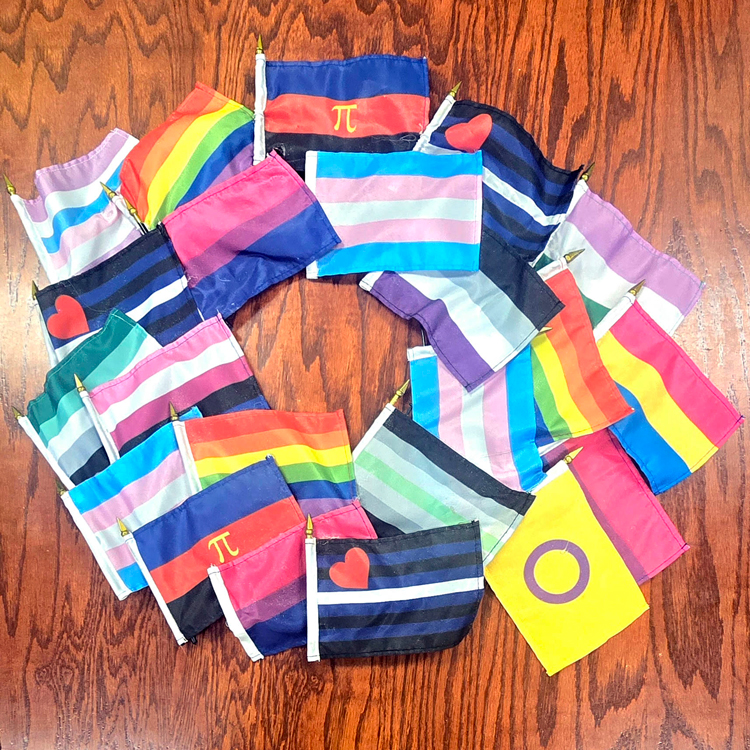
When the Philadelphia Pride flag started appearing—the one with the added brown and black stripes—I took offense. As a gay white man in my fifties, my identity grew under the six-color rainbow, and to me that flag had always meant everybody. The original intent was specifically to be inclusive of everyone in the LGB(T) community. Adding stripes felt like an accusation: that the flag I’d lived under wasn’t inclusive enough, that I wasn’t inclusive enough. I experienced it as divisive rather than inclusive.
It triggered me to do some self-reflection. If people in my community don’t feel represented, who am I to tell them they should feel that way? I’m not actually harmed by two more stripes. It was different from what I was used to. What matters is whether people feel seen, not whether I feel comfortable.
But arriving at that answer about the flag opened up a harder question—one I’ve been turning over for years in my work as a psychologist and in my own life: Who actually belongs in “our” community, and on what basis do we decide?
Our community has been asking this question for nearly 50 years. We started as separate gay and lesbian communities, in political coalition but not unified. We came together as one community in the 1980s, partly under increasing political threat and partly because lesbians were stepping into a caregiving role for gay men dying of AIDS. By the time I was in college, presiding over our campus Gay and Lesbian Student Union, the question was whether to include bisexuals. The argument against was that bi people could blend into straight society in ways gays and lesbians could not, that they faced less rejection, and so didn’t warrant inclusion. What that argument missed—and what I still see in my practice—is that bi and pan people had to hide or deny themselves in order to access that “blending in,” and many still do. They are formally in the community and the LGBTQ acronym now, though some biphobia remains.
In the 1990s, a similar struggle re-occurred with trans people. However, this time it was really a question of re-inclusion. Trans people were part of gay life before gay political identity coalesced in the 1970s and pushed them to the margins. The argument against re-inclusion was that sexual orientation and gender identity are separate issues. They are. But that framing missed the deeper truth: both groups faced rejection and discrimination for violating traditional gender norms. Trans people are now formally included in the acronym and in nearly every redesigned Pride flag. Whether they have achieved actual inclusion in the larger community is a different question. Behind the doors of my consulting room, and in public debates about trans athletes and youth health care, the answer is clearly no.
The 2000s brought nonbinary and gender-nonconforming identity into the conversation, and this is where many people in my generation have struggled. I’ll speak for the older gay and lesbian friends I’ve talked with about this: they spent decades fighting to be recognized as real men and real women who happened to love the same sex. The recognition of being man or woman, and not something “other,” mattered to them. It was hard-won. The reframing of gender as a continuum rather than a binary, and the emergence of identities like genderfluid and bigender, felt to some of them like the ground was being pulled out from under what they’d fought for.

My own experience was different. Nonbinary identity made intuitive sense to me from my first exposure. What I had been wrestling with privately, before I had the language for it, was what being a real man meant for me. Exploring how gender could mean different things to different people is part of what drew me to working with the transgender community starting in graduate school. When I encountered nonbinary people and ideas, they didn’t threaten my sense of myself as a gay man. They added to it. Gender flexibility felt like a natural extension of the work I’d already been doing.
Whatever the route, the destination matters more than the path. Nonbinary people are technically subsumed under the “T” in our acronym, while frequently being rejected by other people who identify with that same T. They don’t appear on most Pride flags I’ve seen. They don’t have their own letter. In practice, their inclusion in our community is more a default than a commitment.
The 2010s brought asexual and aromantic identities into the conversation, and at first this seemed foreign to me—even counter to what LGBTQ identity had always been about. My own queerness has always been so tied up with desire that an orientation organized around its absence was hard for me to make sense of. I really had to see beyond myself. But that reaction missed the point. To the larger society, ace and aro people violate heteronormativity in much the same way the rest of us do, and they can face the same kind of judgment. This inclusion stretched the acronym to LGBTQIA+, with the A doing double duty for asexual and aromantic, and intersex pulled out from under the T to claim its own letter. Some versions go even further: LGBTQIAA2+ or longer, with the second A sometimes added for allies, though this is contested, and the 2 for two-spirit, a specifically Indigenous identity that doesn’t map neatly onto Western gender categories. At this point, the acronym is genuinely unwieldy.
The unwieldiness of the acronym isn’t the only concern people raise. Some members of the LGB community feel that each new inclusion dilutes the identity of those already included—that resources are being diverted to trans members while LGB people are again under attack, that their fight isn’t our fight, that LGB people are put at greater risk by association with trans people. I hear this in my practice and in my own social circles. I take the worry seriously, even where I disagree with where it lands. The fear of dilution is real, and dismissing it tends to entrench it. But the answer isn’t to narrow the coalition. The answer, I think, is to be clearer about what actually unites us—because if our unity rests on a shared list of identities, every new identity will feel like a threat. If it rests on something deeper, it won’t.
Most recently, polyamory, consensual non-monogamy (CNM), and kink communities have begun asking to be included. Many people reject this, claiming these are “choices,” not identities. That argument should sound familiar—it’s the same one used against gay people for decades. As a psychologist who works clinically with CNM and kink clients, I’ll say what the research has been showing for years: these orientations exist on continua, the way sexual orientation does. For some people, monogamy genuinely doesn’t fit, and trying to force it causes real harm. For others, an interest in kink isn’t optional but essential—it’s part of how they experience intimacy and arousal at all.
The discrimination these clients face is also not hypothetical. I have had more than one client scrub any trace of their kink affiliation from their online presence before a job search. I have had clients fired after being outed as poly at work. The protections that the LGB community spent decades winning—imperfect and incomplete as they are—do not extend to these communities at all. When someone tells me that polyamory is just a lifestyle choice and not a real identity, I think about those clients, and I think about how recently the same thing was said about us.
These communities also share long histories with ours—the leather community being the most visible example—that predate the current debate by decades. None of this resolves the question of whether they belong in our coalition, and there’s real homophobia and transphobia within these communities that has to be reckoned with honestly. But the “it’s just a choice” argument doesn’t hold up, and we should know better than to use it.
Some academics have started using the acronym SGRM—Sexual, Gender, and Romantic Minorities—and I understand the appeal. It solves the unwieldy-acronym problem and leaves room for further inclusion. But it doesn’t solve the question underneath the acronym. On what basis do we decide who belongs?
Here is where I have landed, after years of turning this over. I feel kinship with anyone whose non-exploitative sexual, gender, or romantic identity would be considered sick or wrong by a significant portion of the population. If people are relegated to other or bad for violating heteronormativity—whether it’s who they love, how they love, or how they understand themselves—they are, at the root, fighting the same fight we have been fighting. None of us has to give up our identity in order to align with another identity. Coalition doesn’t require sameness. It requires shared stakes.
This doesn’t mean every oppressed group belongs in our coalition. There is meaning in being united by something specific rather than by weirdness relative to the larger society. And as a coalition of communities rather than a single unified community, we’ll always have internal friction—we have since the first coalition formed in the 1970s. But I think the better question isn’t Who deserves to be let in? It’s What counts as sufficient harm to justify exclusion? That’s a question that takes seriously the cost of exclusion to the people we exclude. It’s the question I wish we had been asking all along.
When the Philadelphia Pride Flag added those stripes, I was being asked, in a small way, the same question. My answer then was that representation matters more than my comfort. The answer holds for the larger question, too. A community that grew out of being pathologized has more to gain by widening its circle than by guarding it.
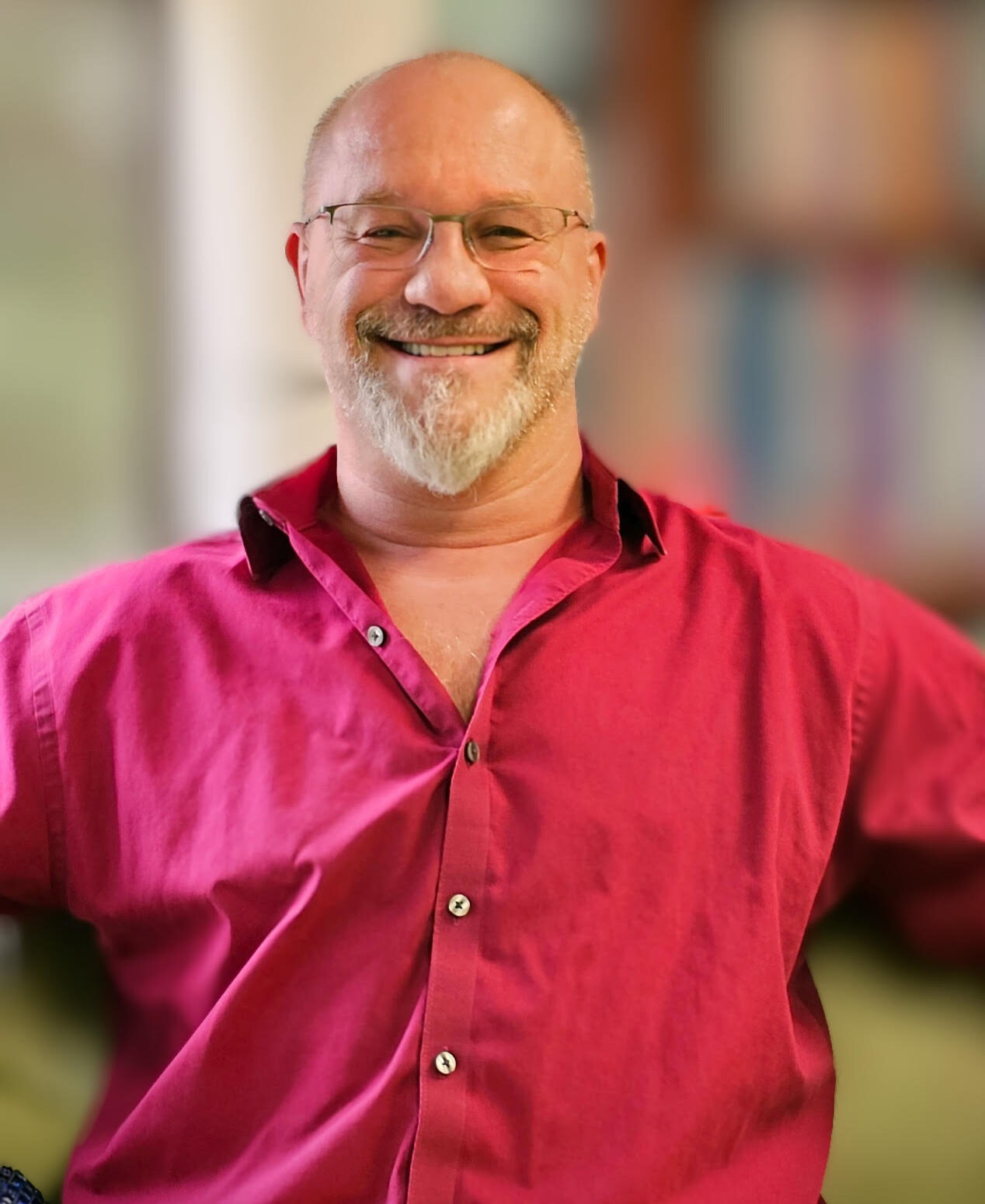
Denis “Woodja” Flanigan, PhD is a licensed psychologist and frequent winner in the Gayest & Greatest Readers’ Choice Awards. He offers psychotherapy for anxiety, depression, relationships, and life transitions. For more info, visit houston-psychologist.com.