
Pride Flag Removed From Stonewall Monument, Sparking Outrage
LGBTQ advocates call the move an attack on visibility and history.

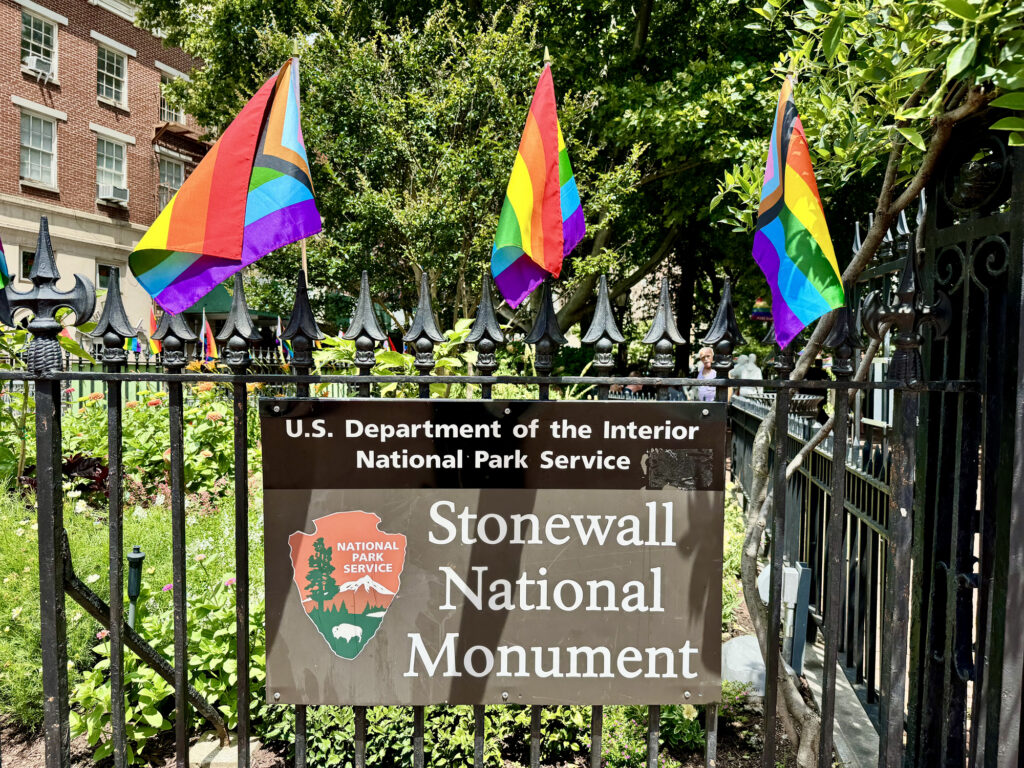
A large rainbow Pride flag has been removed from the Stonewall National Monument in Manhattan following a directive tied to National Park Service policy, drawing sharp criticism from LGBTQ advocates, elected officials, and community members who view the decision as an attempt to diminish queer visibility at a historic site.
The Stonewall National Monument, located in Greenwich Village, commemorates the 1969 Stonewall uprising, a series of protests widely recognized as the catalyst for the modern LGBTQ rights movement. Designated a national monument in 2016, it was the first in the United States dedicated to LGBTQ history.
The Pride flag was taken down after the Department of the Interior issued new federal guidance on Jan. 21 regarding the display of “non-agency” flags within the National Park System. The guidance limits which flags may be flown on National Park Service-managed flagpoles, generally allowing only the U.S. flag and other congressionally or departmentally authorized flags, with limited exceptions.
Elected officials and employees of the Stonewall Inn said they noticed the flag’s removal on Monday morning. The National Park Service later confirmed that the change was made to comply with the new guidance, stating that “any changes to flag displays are made to ensure consistency with that guidance,” while noting that the monument continues to preserve the site’s historic significance through exhibits and programs.
The decision sparked swift backlash.
Cathy Renna, communications director for the National LGBTQ Task Force, condemned the removal in a statement.
“They can take down a flag, but they can’t take down our history,” Renna said. “The removal of the rainbow flag from the Stonewall National Monument is another reminder that efforts to chip away at LGBTQ+ visibility are happening in real time. What stands at Stonewall is more than a landmark; it’s sacred ground rooted in resistance, liberation, and the legacy of trans and queer trailblazers who changed the course of history.”
Renna added that the move fits into a broader pattern of rollbacks targeting LGBTQ people, particularly transgender communities.
“Our community has never backed down from attacks on our existence, and we won’t start now,” she said. “The fight for our freedom continues, especially in defense of our trans siblings who remain at the center of these targeted rollbacks.”
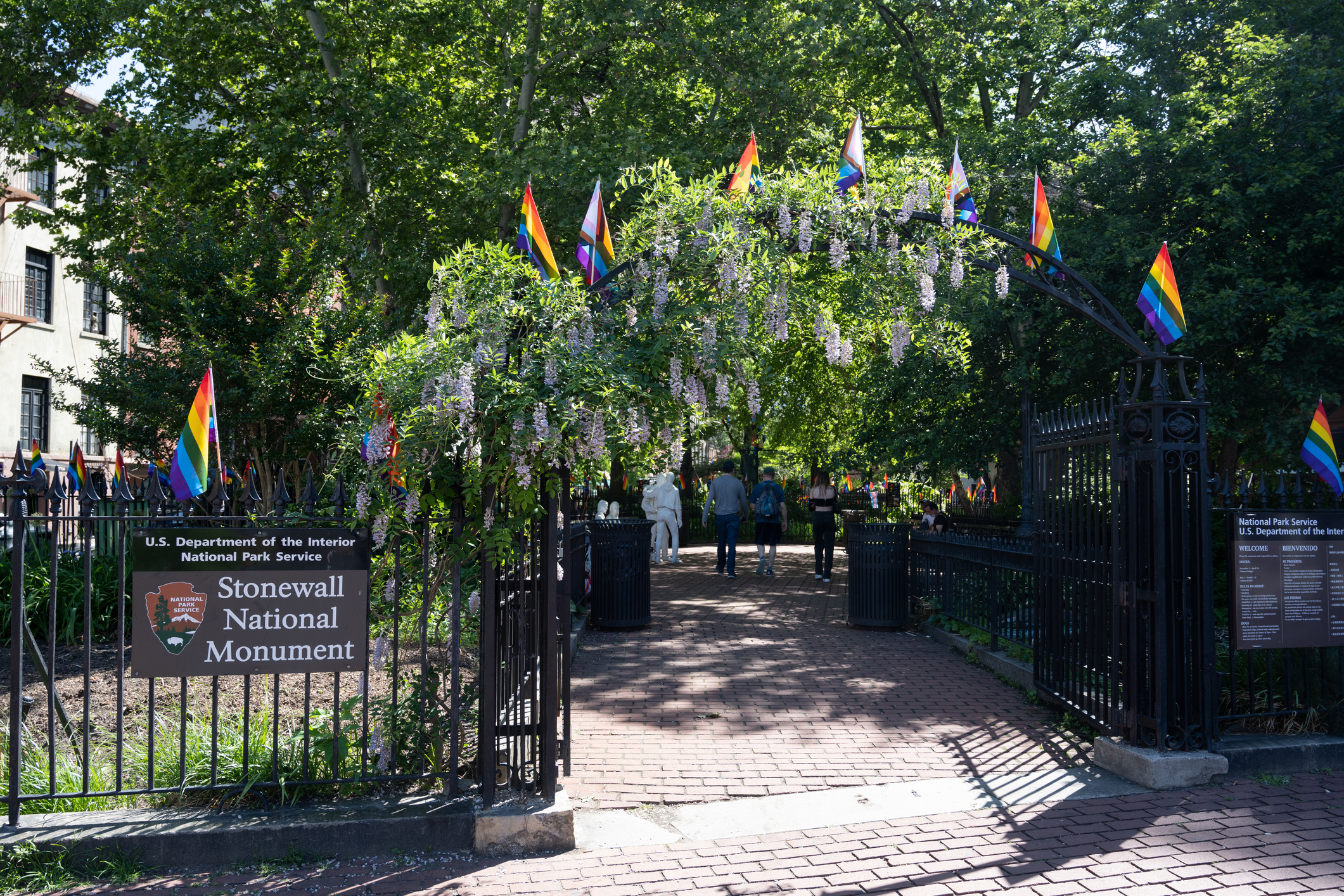
Stacy Lentz, an owner of the Stonewall Inn, said she was surprised and troubled by how quietly the flag was removed, especially given prior changes made at the site.
“To think you can go to Stonewall and just take down the Pride flag is telling of the time we are living in,” Lentz said. “The flag is not just an abstract symbol; it tells LGBTQ people, especially younger ones, that their history will not be sidelined again.”
The Manhattan borough president, Brad Hoylman-Sigal, criticized the decision and shared the federal memo that led to the removal. Hoylman-Sigal, who is gay, called the move “meanspirited” and said the community would not stand by while its history is erased.
U.S. Senate Minority Leader Chuck Schumer also denounced the removal, calling it “deeply outrageous” and urging that the flag be restored. He said efforts to erase LGBTQ history would ultimately fail.
The removal follows other recent actions affecting LGBTQ representation at the monument. Last year, references to transgender people were removed from portions of the Stonewall National Monument website, prompting protests in Greenwich Village.
Community members and local officials have said they plan to continue demonstrating at the site, emphasizing that Stonewall’s legacy extends beyond any single symbol.
As advocates stress, while a flag may be taken down, the history and resistance rooted at Stonewall remain central to the ongoing fight for LGBTQ visibility and equality.