
Barney Frank, Trailblazing Gay Congressman, Dies at 86
Massachusetts Democrat shaped LGBTQ politics for decades.

This story was originally reported by Orion Rummler of The 19th. Meet Orion and read more of their reporting on gender, politics, and policy.
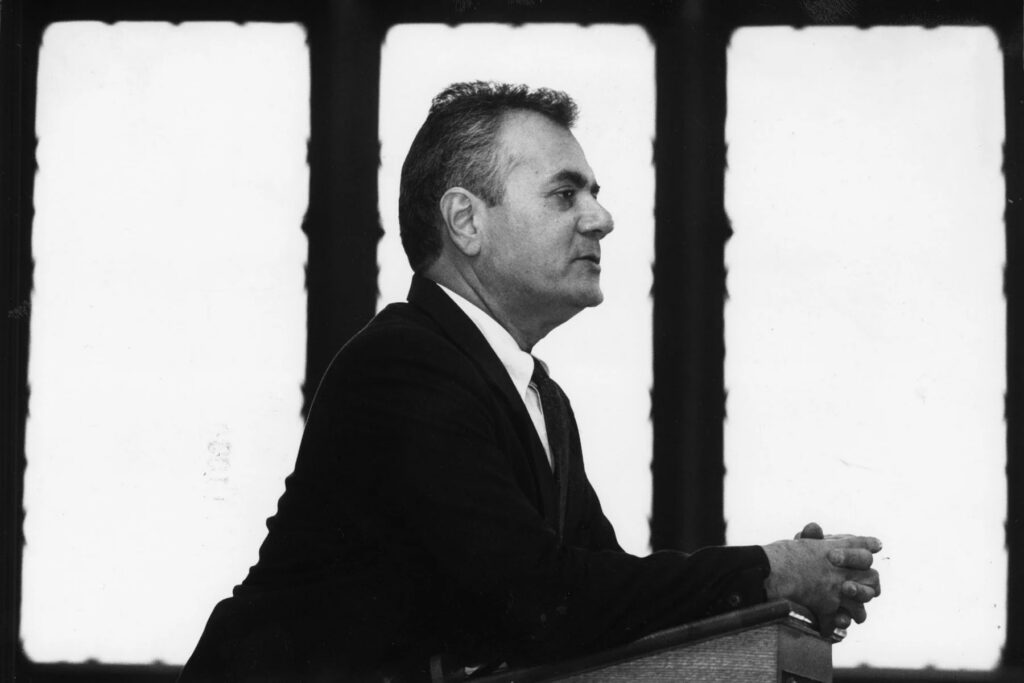
Former Rep. Barney Frank, the most prominent out gay politician in the United States for over a decade, died Wednesday after entering home hospice care for congestive heart failure. At 86, the Massachusetts Democrat continued going on cable news and speaking with reporters, friends, and former colleagues to espouse his beliefs on the future of his party.
Frank’s life in politics was marked by staunch liberalism, a passion for debate, and a sharp wit. In Congress, he spearheaded major legislation to protect consumers and regulate banks after the global economic crisis of 2008, through what’s known as the Dodd-Frank Act. In his view, he brought progressive concerns about inequality into the mainstream.
He also made history as the first member of Congress to voluntarily come out as gay in 1987. He retired from the U.S. House of Representatives after spending 32 years in Washington, and most of those as an out politician, during a time when being gay could end a political career.
Although he advocated for gay rights, Frank staunchly believed in working within the political system to do so. He criticized public activism, like marches, as ineffective. He was deeply opposed to California’s “Winter of Love” in 2004, when the San Francisco mayor at the time, Gavin Newsom, flouted state law by issuing marriage licenses to same-sex couples. At the time, he blamed the tide of constitutional amendments against gay marriage on what he dubbed “spectacle weddings.” (Newsom is now the governor of California.)

In the end, Frank seemed to spend more time thinking about politics than his own mortality. While in home hospice care, his criticism of the LGBTQ rights movement continued. In interviews with The New York Times and CNN, he argued that the public isn’t ready for certain social changes—like allowing transgender women to play in women’s sports.
“I think in the interest of the transgender community, as well as others, it would be better to go at that in a more granular way and not simply announce that if you don’t support it, you’re a homophobe,” he told CNN anchor Jake Tapper, shortly after entering hospice care. He compared the issue to how same-sex marriage fit into the strategy to advance gay rights; since marriage was a more controversial topic, it came after other efforts for economic and social equality, he said.
Plenty of advocates would disagree with that view. Efforts to fight workplace and housing discrimination did predate the push for marriage equality, but controversy surrounding same-sex marriage was always in play. Just as LGBTQ advocacy groups invested in campaigns to shape public opinion on gay marriage, the same work is taking place now to garner support for trans rights.
Frank’s newest—and last—book promises to delve further into this topic and to expand on his critiques of the Democratic Party. “The Hard Path to Unity: Why We Must Reform the Left to Rescue Democracy” is scheduled to come out in September. He is survived by his husband of 14 years, Jim Ready. The pair met at a political fundraiser in 2005.