
Appeals Circuit Sends Gender Affirming Care Case Back for Review
Ruling upholds major protections and clarifies limits on insurer defenses.


The U.S. Court of Appeals for the Ninth Circuit issued a significant ruling Monday in a case challenging the administration of categorical exclusions for gender affirming care in hundreds of employer-provided ERISA health plans. The lawsuit centers on Blue Cross Blue Shield of Illinois (BCBSIL) and its role as a third-party administrator for plans that barred medically necessary gender affirming treatment.
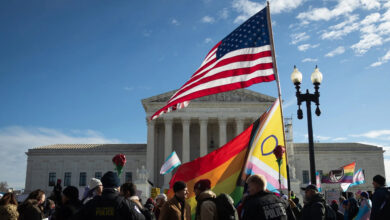
In its decision, the appellate court affirmed the lower court in almost every respect and sent the case back for further consideration of one issue: how the district court should analyze sex discrimination claims after the U.S. Supreme Court’s recent decision in United States v. Skrmetti. The case will now return to the district court with new guidance.
The court upheld the district court’s rulings in three major areas. First, it affirmed that all operations of a health insurer fall under the Affordable Care Act’s Section 1557 anti-discrimination protections when the insurer accepts any federal funding. Second, the court confirmed that third-party administrators such as BCBSIL can be held independently liable for administering discriminatory plans and that ERISA fiduciary duties to employers do not override federal anti-discrimination law. Third, the court rejected any use of the federal Religious Freedom Restoration Act as a defense in lawsuits between private parties or as a shield for third parties in these circumstances.
Although the court vacated the judgment and remanded the case for further analysis under Skrmetti, it outlined two routes by which the plaintiffs could still win, including the possibility that BCBSIL may be liable for proxy discrimination.
Omar Gonzalez-Pagan, Senior Counsel and Health Care Strategist at Lambda Legal, underscored the significance of the ruling. “The decision by the court of appeals is wide-ranging and upheld the district court’s reasoning and our arguments in critical respects. Indeed, in all but one respect we prevailed, and the court established a strong precedent about the scope of the Affordable Care Act’s anti-discrimination law, which covers third-party administrators, and the lack of defenses under RFRA in private litigation,” he said. While noting the need for the district court to revisit its sex discrimination analysis, Gonzalez-Pagan added that the ruling “laid a clear roadmap of ways in which plaintiffs may prevail even after Skrmetti, reaffirming the longstanding doctrine of proxy discrimination.”
Eleanor Hamburger of Sirianni Youtz Spoonemore Hamburger PLLC, co-counsel for the plaintiffs, welcomed the appellate court’s conclusions. “The Ninth Circuit confirmed what we knew all along. Third party administrators like BCBSIL cannot just follow orders from employers when those orders result in illegal discrimination,” she said. “And we look forward to proving in the trial court that BCBSIL’s categorical exclusions of gender-affirming treatment are illegal discrimination, despite Skrmetti.”
The case began as a class action brought on behalf of three transgender plaintiffs: a then-15-year-old transgender boy known as C.P., his parents, a 13-year-old transgender girl referred to as S.L., and a transgender man, Emmet Jones. Lambda Legal and Sirianni Youtz Spoonemore Hamburger PLLC argue that BCBSIL’s administration of blanket exclusions for gender affirming care violates Section 1557 of the Affordable Care Act.
The litigation has already produced major district court rulings. In December 2023, a federal judge granted class-wide relief and declared that BCBSIL’s exclusion of gender affirming care violated Section 1557. The court prohibited BCBSIL from administering such exclusions going forward and ordered the reprocessing of improperly denied claims dating back to November 23, 2016. That ruling followed a 2022 decision certifying a class of individuals who were or would be harmed by the exclusions, as well as a ruling later that year confirming that third-party administrators receiving federal funds must comply with Section 1557.
The case, C.P. v. Blue Cross Blue Shield of Illinois, is being litigated by Lambda Legal attorneys Omar Gonzalez-Pagan, Jennifer C. Pizer, and Karen Loewy, along with Eleanor Hamburger and Daniel Gross of Sirianni Youtz Spoonemore Hamburger PLLC.
The Ninth Circuit’s ruling provides new direction for the district court, but it also preserves crucial legal conclusions that strengthen future challenges to discriminatory exclusions in health plans nationwide.