
FLAS and Elia Chino Lift Houston’s LGBTQ Latino Community
Nonprofit provides free bilingual health, HIV, and recovery services.

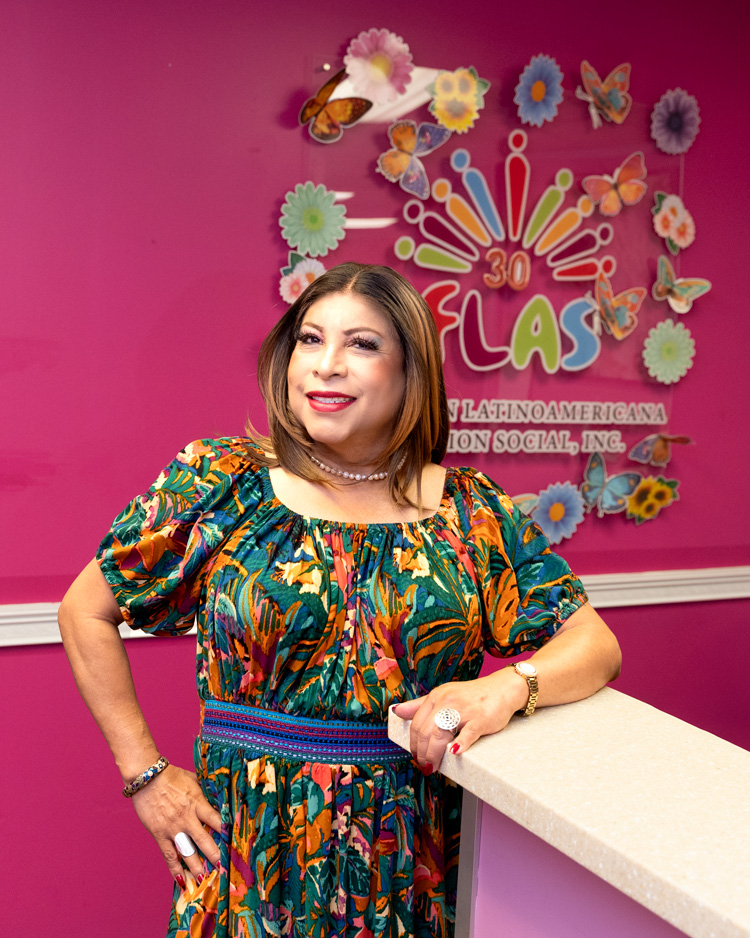
For the past 31 years, FLAS—Fundación Latinoamericana de Acción Social (Latin American Foundation for Social Action)—has been helping to make lives better for the LGBTQ Latino community in the Greater Houston area.
It all started during the height of the AIDS crisis with one Latina woman, Elia Chino. With a deeply felt passion to help her community, she founded FLAS as a way to offer a variety of innovative, diverse, and inclusive services.
“We treat all people with respect, dignity, love, empathy, and kindness,” Chino says. “We provide services with open doors, open hearts, and open hands.” All services are provided at no cost to clients, the result of an active grant program.
Chino was born in 1962 in the small Mexican village of Agua Blanca. Her life was a challenge from the very start as she helped her parents and eight siblings. She cooked, cleaned, and walked to a local river to wash the family’s clothes.
Chino originally identified as a gay man before transitioning to her authentic gender identity in 2008. As a child, she was bullied and assaulted for her “feminine” mannerisms. She grew used to being called faggot, bitch, or gay. Even after moving to the United States, life still held enormous struggles for her—all of which she met head on, helped by new American friends and her faith.
Responding to the AIDS Epidemic
In the 1980s, Chino volunteered at both AIDS Foundation Houston (now Allies in Hope) and Ben Taub Hospital. She helped AIDS patients eat, drink, and go to the bathroom. She sat with them, reading the Bible and praying. Ultimately, she held them in her arms as they passed from this life.
Chino says most of those Latino gay men who died from AIDS had no contact with their families. “They were leaving their countries to have a better quality of life,” she says. “What they found here was disease and death. Many families never again heard anything about their sons who had died.”
Finally, in 1994, Chino decided to start an organization to help distribute prevention information to the LGBTQ Latino community. “There wasn’t enough information in Spanish,” she remembers. Additionally, there was “stigma, fear, taboos, discrimination, and phobia.” But she was not deterred. “I never lost my faith in God.”
Chino was working at a Mexican restaurant at the time. She had one customer who usually came in three times a week. When she mentioned that she wanted to set up FLAS, he offered to give her office space in a corner of his accounting office and helped her set up a nonprofit corporation.
Chino then began doing outreach at Latino cantinas, bars, and nightclubs—all without compensation. Partnering with the Houston Health Department, she was able to stock up on condoms and Spanish-language literature.
In order to fund the efforts of FLAS, Chino approached the Education Department at Texas Southern University. The department wrote a grant titled “HIV Prevention among Hispanic Youth.” When the grant was approved, Chino was asked to be the program director. A second grant was approved, and Chino ended up working for the university from 1996 to 2003, continually growing FLAS along the way.
A Permanent Home
In 1999, there was enough grant money for Chino to open a small office at 6666 Harwin Drive. FLAS now had about 700 square feet of space.
Chino recalls that while doing outreach, there were some businesses that told her that there were no gay people and no AIDS in the Latino community. Some nightclub patrons would take a condom from her and then throw it away in front of her. She thought, “If I help save one life, I have done my job.”
As the CEO of FLAS, Chino was asked to become part of the Houston Health Department’s Community Planning Group and its Latino HIV Task Force, of which she was the chair. She was also a member of the Houston Ryan White Planning Council.
Chino often helped to raise money for funerals, cremations, and shipping bodies back home after young Latino men died of AIDS. She often held fundraisers at Inergy, a Latino gay bar, to help families pay the costs.
Outreach Programs
The first program that FLAS undertook was to educate youth about HIV. “We had an emphasis on youth ages 11 to 21,” Chino says.
FLAS never had the opportunity to go to schools, which did not allow visiting speakers to talk about sex, condoms, or HIV. “If you cannot talk about the methods of HIV transmission, you are not providing accurate education,” Chino explains. So instead, she gave presentations at libraries, community centers, apartment complexes, and even churches.
FLAS now offers health screenings for HIV, sexually transmitted diseases, hepatitis C, and fatty liver (which is often a sign of alcohol addiction). Many programs deal with mental-health issues and substance abuse recovery. Individual and group therapy is available, and staff members are bilingual.
“We use a holistic approach,” Chino says. FLAS even offers Zumba classes, a high-energy dance fitness program designed to be an enjoyable means of exercise and social interaction. A Re-Connect program features meditation, candles, sonotherapy, and aromatherapy to promote relaxation and calm anxiety.
Through a special grant, FLAS can provide rental assistance for people living with HIV. The organization also helps clients apply for a Harris County Gold Card that provides financial assistance for essentials such as electricity, insurance, food, and health care. FLAS works with a collaborator that provides English as a Second Language classes at low cost.
In 2017, after Chino was diagnosed with cancer, she successfully underwent chemo and radiation therapy. During this time, Hurricane Harvey unleashed its wrath on Houston. Despite being bedridden with her own health crisis, Chino’s response was to start a food pantry.
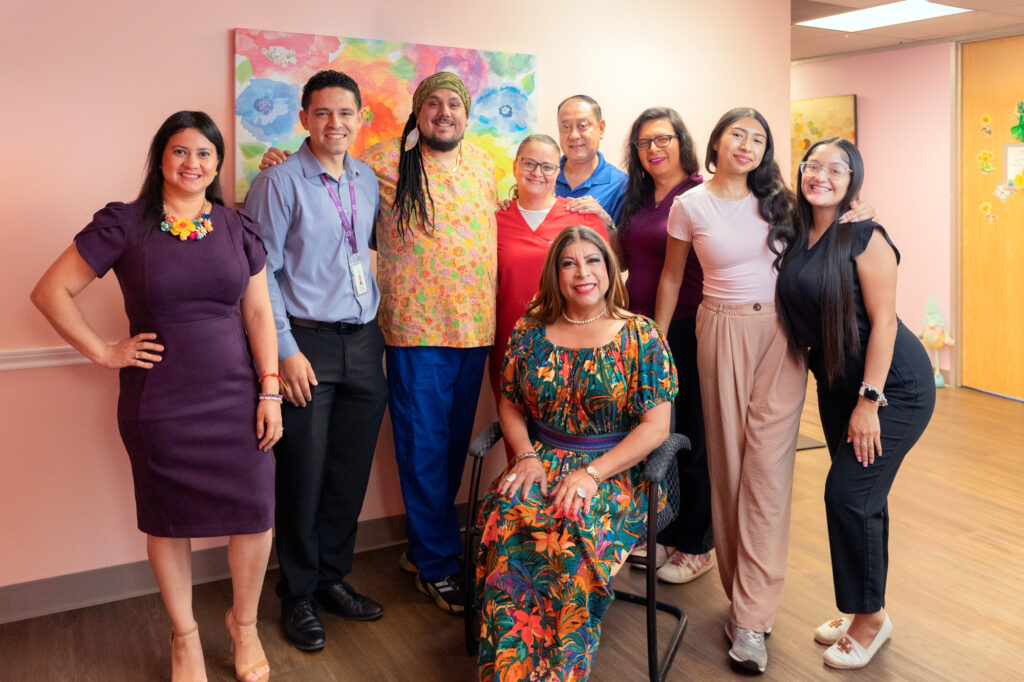
In addition to its 21 full-time staff members, FLAS also uses contractors and volunteers. Their office space has grown to 10,000 square feet.
FLAS currently has an active relationship with the Mexican consulate and numerous other Latin American consulates, including El Salvador, Peru, Guatemala, and Honduras. The organization has also established relationships with universities and Houston Community College, along with other community-based organizations, health centers, and clinics.
FLAS is the fiscal agent for the Window of Health program at the Mexican consulate. A part-time staff member coordinates the program, and the consulate provides space.
To further expand their outreach, the organization has created a number of YouTube novellas on important subjects. They can be accessed at youtube.com/@flasinc2501/videos.
FLAS also makes it a point to be flexible in helping clients. Staff will come in on weekends or stay later at night if someone can’t be there during regular business hours.
For more info, visit flasinc.org.