

The Dads Captures Families Fighting for Trans Youth
Documentary follows fathers navigating attacks on gender-affirming care.

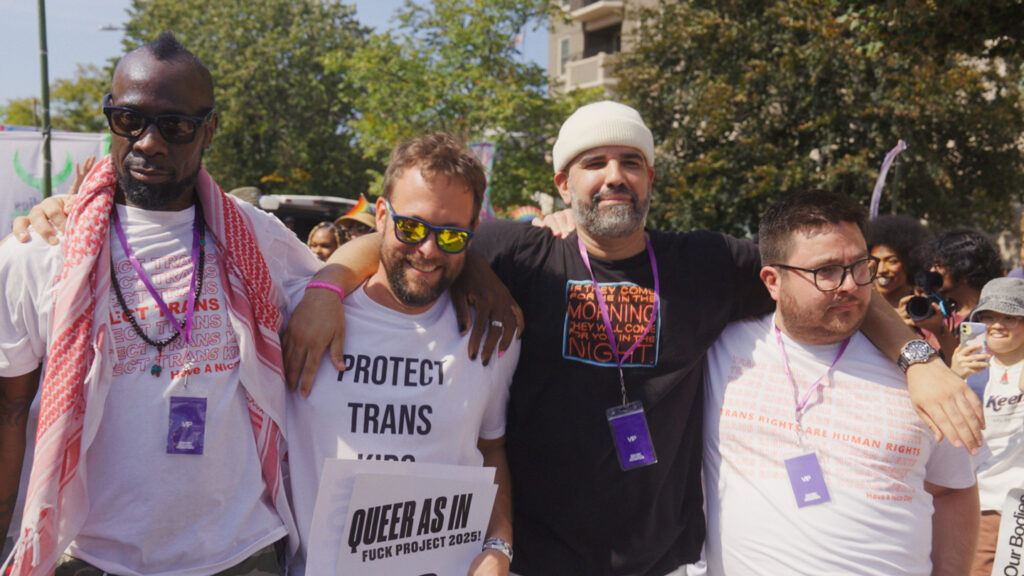
The Dads Foundation began in 2023, offering a place for fathers of trans children to commune, share resources, and foster a sense of vulnerability around parenting youth in the gender spectrum. For them, it’s not just about acceptance, but material measures of support, including accessing healthcare.
Director Luchina Fisher captures the members of the organization as they deal with the rising vitriol and restrictive policies facing trans people in the US today in her new feature documentary, The Dads, which had its World Premiere at South by Southwest earlier this year. What begins as a weekend retreat becomes a chronicling of a crisis, tracing the fracturing lives of families having to decide how to maintain care for their kids among healthcare restrictions and threats of criminalizing even offering gender-affirming care.

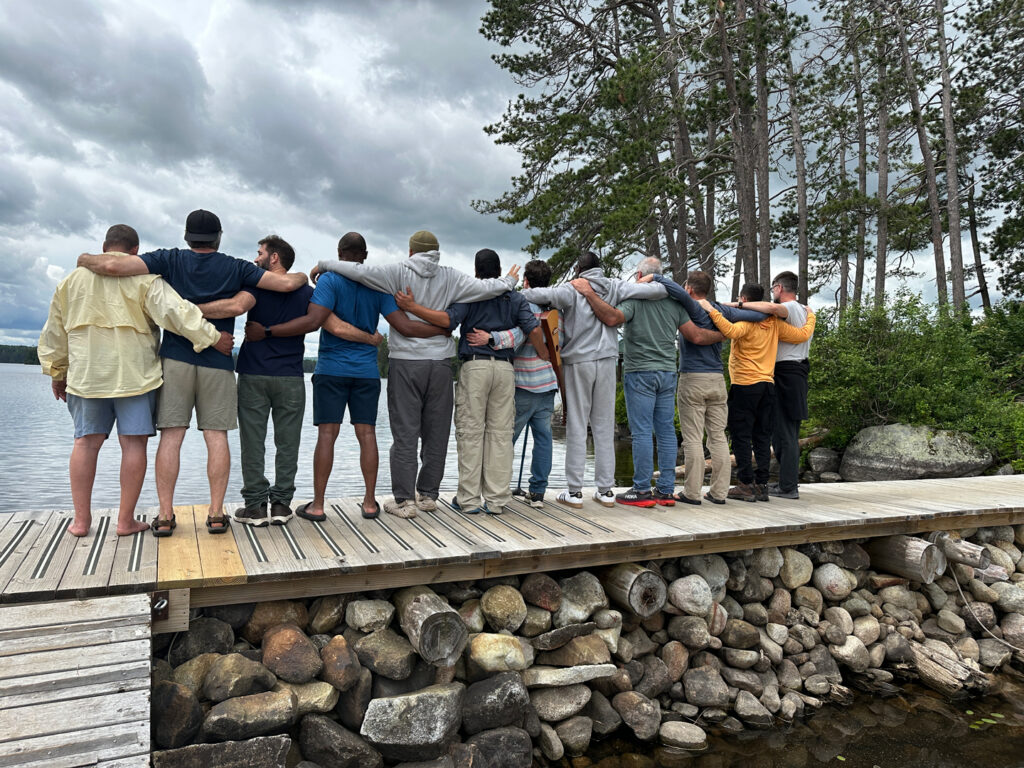
The Dads started off as a short documentary following a group of dads going on a trip to the woods, bonding over their shared experience parenting queer and trans kids. “It was five dads of trans kids with Dennis Shepard going fishing,” says Fisher.
Dennis Shepard is the father of Matthew, the victim of a hate crime in 1998, whose murder reverberated throughout the national news. “I had no idea that it was Dennis’s first time fishing since Matthew had been slain. It was unbelievable. And it was the 25th anniversary [of Matthew’s death] when the film was released, so it had this poignancy. Dennis was an exemplar of fatherhood and of a father showing up for his queer child. These dads learned so much from him, and they learned so much from each other. It was this conversation [among] dads about their internal fears, sense of isolation, and need for community. Out of that film, [the dads] felt strongly that they needed to keep going, so they started a movement. They started the Dads Foundation.”
What began as a handful of fathers grew into a collective of men across the nation. It gave them a space not only to disseminate critical resources to ensure their children can receive care, but also an accepting space to express complicated emotions and concerns for the future. While they only meet in person once a year for a retreat, they have ongoing group chats to stay connected. As the group continued to grow, so did the drive to continue the film’s story.“
The initial plan was just going deeper with the fathers beyond the fishing trip. Let’s go home and see what their ordinary lives were like, because I thought that’s what was missing. People think that parents of gender expansive kids are these super leftist people; they don’t think they’re regular Joe Schmoes,” says Stephen Chukumba, one of the original members of the group and a producer on the film.
But things shifted pretty quickly as the election drew closer, with the changing political tides. As a documentary, the film had to adapt, altering to focus on the response that these dads had to continue to provide for their kids while dealing with forces that they couldn’t singularly control.
“Already there was the feeling of anticipation of the worst possibility happening,” says Fisher, “especially because you had dads who lived in states like Texas, where they had been battling for some years, and they could see where things were going. But the federal government had always been a backstop. We were getting some of those indications before the presidential election, but certainly that night everything changed.”
It was more than just a narrative shift as the paradigms for these families were completely altered. Each new governmental decree meant deciding if it was even possible to continue to receive medical attention in the States at all as a trans person. The film chronicles each of these moments, choosing to demarcate time with title cards that eventually span a year. This framing collapses a larger moment into something more digestible, but in doing so, it illustrates the rapid rate at which this crisis was set into motion.
“We were also seeing what has now become the collapse of gender-affirming care in our country. I was not struck by that until we got into the edit. These dads were really on the front lines. This [film] was capturing a moment in time, and as a former journalist, I believe you have to capture truth and reality as it’s happening, because someone will come years later and say, ‘No, that didn’t happen.’ It’s always important that we have a record of that.”
While many families wanted to continue to film, others had to take matters into their own hands, whether that was leaving their cities or even leaving the country. “I understand those parents who have to make the decision based on their kids’ healthcare or the families that have learned that they are being targeted,” says Fisher.
Much of the film, and each of the dads’ journeys, is figuring out their relationship to fear. In a climate where not only trans rights but also trans bodies are under attack, questions around safety continue to proliferate, and as parents, they have to make informed decisions that can have drastic consequences.
“That inherent fear dads have in sharing their children’s identity beyond the family is the first level of fear,” says Chukumba. “That’s the ground [level] fear because we have to confront all of our internal prejudices as well as external prejudices. And then in your state, you’re going year after year to the state House to argue for your child to be able to use the bathroom, to play on sports teams, to have healthcare. And that’s now step two. Then the federal government steps in, and now you’re looking at potential regulations that strip everyone of their rights the way these executive orders did. And now, I’m standing ten toes deep with my kid.
“I can’t fight the federal government when they close down hospitals, when doctors are shutting down their clinics. We’re getting letters saying we will no longer serve transgender children below a certain age. Then the calculus starts to change. It’s not even necessarily fear, but you’ve got to be practical.”
This relationship between practicality is core to what both The Dads Foundation and the larger documentary illustrate. Each family has to make that choice for themselves, just as it’s important for certain individuals to stay and fight, others need to ensure they can receive access to the care they need to live the life they should be able to have.
“I’m not necessarily afraid,” says Chukumba. “I’ve been fighting this fight for over a decade. But I have to be practical because my child needs that next shot. My child needs that implant; my child needs to see their endocrinologist. The fear response isn’t necessarily just ‘I’m scared,’ but ‘what’s going to happen if I don’t get my child what they need sooner than later?’”
While these are daunting questions, it fuels the reason for The Dads Foundation to exist: providing a space to ask them, and for others to share their experiences so it’s not didactic. “That’s part of what the beauty of this movie is, that you’ve got a whole bunch of different dads talking about how they came to accept, appreciate, and support their child,” says Chukumba. “The hardest thing to do is to break that cycle of fear that’s often perpetuated by other men. We have to support our children and model what it is to be supportive fathers for all the rest of the dads who are equally grappling with this information.”
The Dads feature film is currently seeking US distribution; the short film is currently available on Netflix.