
Celebrating the LGBTQ Artists Who Changed Music
Barry Walters’ new book traces the queer roots of disco, punk, pop, country, hip-hop, and more.

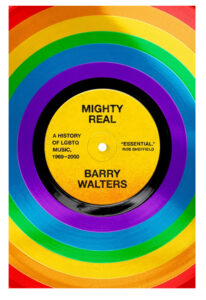
Mighty Real: A History of LGBTQ Music, 1969–2000 (Viking, 2026), by gay music journalist Barry Walters, is a practically comprehensive overview of the music made by and for LGBTQ folks, and its enduring presence and impact. Part reference book, part memoir, the rainbow musical spectrum covered is particularly notable.
Beginning with groundbreaking artists including Laura Nyro and Lou Reed (along with the Velvet Underground), Walters invites us on this revealing musical odyssey that touches on a vast array of talent including Sylvester, Elton John, The B-52s, Wendy Carlos, k.d. lang, Bob Mould, Indigo Girls, Bronski Beat, and Dusty Springfield, to mention just a few. Additionally, Walters makes a point to include allies such as Cyndi Lauper, Grace Jones, Bette Midler, Patti Smith, Cher, Dolly Parton, and Madonna, as well as influential record labels (Motown and Olivia) and genres (disco, punk, post-punk, and hip-hop).
The author deserves praise not only for his vast knowledge of the subject, but also for the way he connects the dots with several artists. Walters spoke to OutSmart ahead of the book’s publication last month.
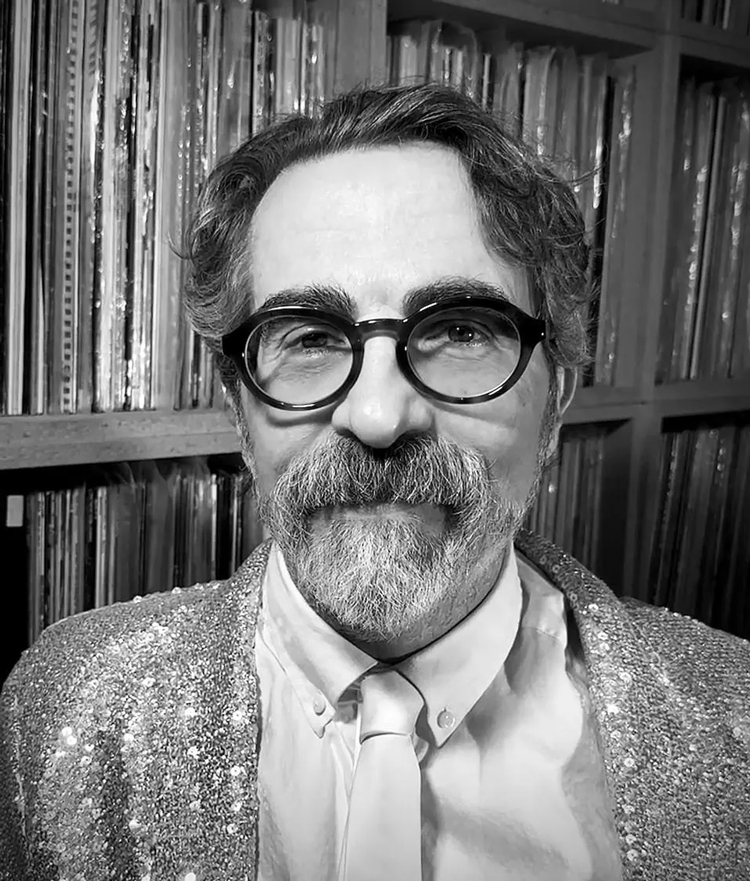
 Gregg Shapiro: Did the concept for this book begin with one of the essays you’ve included, or was the idea for the book already fully formed from the onset?
Barry Walters: The book’s inspiration is a departed friend of mine, Vito Russo, and his extraordinary, pioneering 1981 book The Celluloid Closet: Homosexuality in the Movies. I fell in love with it when I was a graduate-school cinema-studies student at NYU and starting my professional career at the Village Voice. I met Vito through a mutual friend, Steven Harvey—a film critic who wrote in the Voice what might have been the earliest first-person article written about what it’s like to have AIDS. I sensed that Vito wanted to share with me what he knew and loved while he still could. He’d show me Bette Midler at the Continental Baths, or Babs and Judy dueting on The Judy Garland Show, back when footage like that was a coveted, rare treasure. Seen through his eyes, what I had considered old-hat was fresh and vital. In 1987, he revised The Celluloid Closet and included something I’d written in the Voice about Pee-wee Herman that put him in an LGBTQ context. Vito’s blessing made me feel as though I’d become a serious, legit writer. When he and Steve both died, I felt I had to bear witness because I had been spared. After I left the San Francisco Examiner in 1997, I tracked down Vito’s agent. He loved my idea about doing a popular-music answer to The Celluloid Closet, but I didn’t know the first thing about writing a book proposal. I ran out of money and had to plunge myself back into freelance journalism. But when it became feasible to finally write a book, that’s what I returned to.
Did the book grow out of your interviews with Patrick Haggerty (Lavender Country), Judy Dlugacz (Olivia), and countless others as a music journalist?
Mighty Real was indeed facilitated by several decades of interviewing queer and queer-relevant musicians. I dug up old interview tapes I’d recorded, like with Liza Minnelli when she worked with the Pet Shop Boys for her 1989 Results album. That was for The Advocate and I remember my editor liking the piece, even though it was never published.
Mighty Real reads like a memoir interwoven with history—especially the Bowie, Queen, RHPS, and Bronski Beat chapters. Was that how you envisioned the book?
Mighty Real is a history book interwoven with memoir. This book has 60 chapters, and in most of those I discuss several acts, so I cover hundreds of queer and queer-adjacent bands, singers, producers, label owners—you name it. I wrote nearly everything for years without using the “I” word at all. But in one chapter I did write about what it was like reading, as an 11-year-old, about David Bowie for the first time, and how I learned the word “bisexual” through him. So I bought Space Oddity, and what followed from Bowie helped me learn about myself. All of us have variations on that kind of story. I realized that if I wrote about mine, the reader might think about theirs. I also decided to share what it was like, for example, to interview Whitney Houston and hear her lie about herself, but reveal the truth through her actions. Those chapters gave me the confidence to revisit earlier chapters and sometimes be more autobiographical.
Is one of your goals with Mighty Real to inspire readers to explore artists they are unfamiliar with? For example, Parachute Club, Lavender Country, and Phranc.
Yes. I tried to select singers and songs that transcend their genre, especially for LGBTQ readers interested in elements of our culture beyond their experience. You might not ordinarily like folk music, or you might think you don’t like women who call themselves dykes, but if you at least look at Phranc’s I Enjoy Being a Girl album cover, I practically guarantee that you’ll want to hear what’s inside and that you’ll find something you enjoy.
Do you anticipate hearing from some of the artists you cover in the book?
I hope Mighty Real finds its way into the hands of those people, but I didn’t write it for them. I wrote it for us. Before I started Mighty Real in earnest, I wrote about Grace Jones just before her memoir was announced. One thing led to another: Grace read the article and wanted me to condense it for her Hollywood Bowl program. I agreed to do it if she’d say hello to me after playing the Fox, because I had to meet her before I died. As we approached Grace’s dressing room, my husband and I overheard her manager say that Barry Walters was waiting outside. She thought I was someone else wanting to do an interview, and she responded exactly like you’d expect Grace Jones to react. Then her manager said, “No, no, Barry wrote the article I showed you.” Then we hear, “Oh, I love that article!” She then came out of her dressing room completely naked and holding a towel in front of herself, looking for the assistant who had her clothes. My husband found that person, and then she greeted me. I don’t think my family and friends have ever been more enthusiastic over something I’ve written.
Musical theater is an essential component of queer culture for so many. How important was it for you to work musicals such as Kinky Boots into the book?
An early draft of the book had a line that said something like, “There’s no point in writing about LGBTQ participation and themes in theater because, to some degree, it’s all gay.” That’s an exaggeration, but there aren’t multi-billion-dollar corporations keeping theater actors in the closet and making playwrights avoid gay content or forcing them to write about it only covertly, the way there is in rock, pop, R&B, country, hip-hop, and so on. That opposition, combined with queer kids’ hunger to hear themselves represented, is what creates phenomena like Bowie, and why disco had to be invented. So, I decided only to write about theater if it intersects with popular music in a profound way. Is it genuine rock ’n roll or pop, or R&B? Was it played on the radio? Did we dance to it? That’s the kind of music theater I include in Mighty Real. I have a theater degree, so I believe the rest of it is a world unto itself and deserves its own book, not mine.
In Chapter 22, you mention that the B-52s still haven’t been inducted into the Rock and Roll Hall of Fame. Do you think that might change now that an outspoken ally such as Cyndi Lauper has been inducted?
The day after this interview, I received my Rock and Roll Hall of Fame ballot. Melissa Etheridge and Luther Vandross, about whom I write extensively in Mighty Real, have been nominated, as they should be. But once again, not the B-52s. They never have. That goes to show how much antigay sentiment still exists in the music industry. I don’t think our ally Cyndi Lauper, as much as I love and appreciate her, can alone change that. We, as a community, must come together to hold those people accountable.
Would you agree that, despite the deep queer roots of the B-52s and the Village People, it’s surprising that their biggest hits, “Love Shack” and “Y.M.C.A.,” continue to be played at straight functions, including weddings and political rallies?
No, I don’t. So much of what our artists created is so strong and universal that I don’t begrudge anyone for enjoying it their own way, even if it was created by and initially for us. I do, however, find it vile that our culture is co-opted and corrupted by those who repress us. I tried to write about every one of my book’s subjects in such a way that it’s all enticing, no matter if you’re L, G, B, T, Q, or even straight. I want metal fans to read the women’s-music chapter and go “Wow!” I hope women’s-music fans read about Judas Priest and go “Wow,” because both subjects are awe-inspiring. All great art, even if it springs out of pop culture, transcends. Dolly Parton and Queen are perfect examples.
You write about the homophobic and racist 1979 Disco Demolition that took place in Chicago. Is it fair to say that it’s karma that shock jock Steve Dahl has been relegated to the dustbin of history, while Chicago became the birthplace of house music, one of the queerest and most enduring styles of dance music?
The only reason we’re still talking about Steve Dahl is because he put a face onto musical racism, sexism, and homophobia. Chicago has one of North America’s densest LGBTQ populations, so it makes perfect sense that it would inspire both death-to-disco and disco-lives movements. House music, as you know, was created by overlapping communities of gay and Black people, just as disco was. The only white straights initially attracted to it were those eager to attend Black or gay—or, particularly, Black gay—clubs, because that was where they knew they could really let loose and shake it.
Mighty Real is available now at your local independent bookseller, at Barnes & Noble, or on Amazon.