
Black Like That Community Festival Centers Black Queer Houston
Now in its fifth year, the Houston festival turns a phrase once used to police identity into an expansive celebration of Black LGBTQ+ culture, history, music, and belonging.

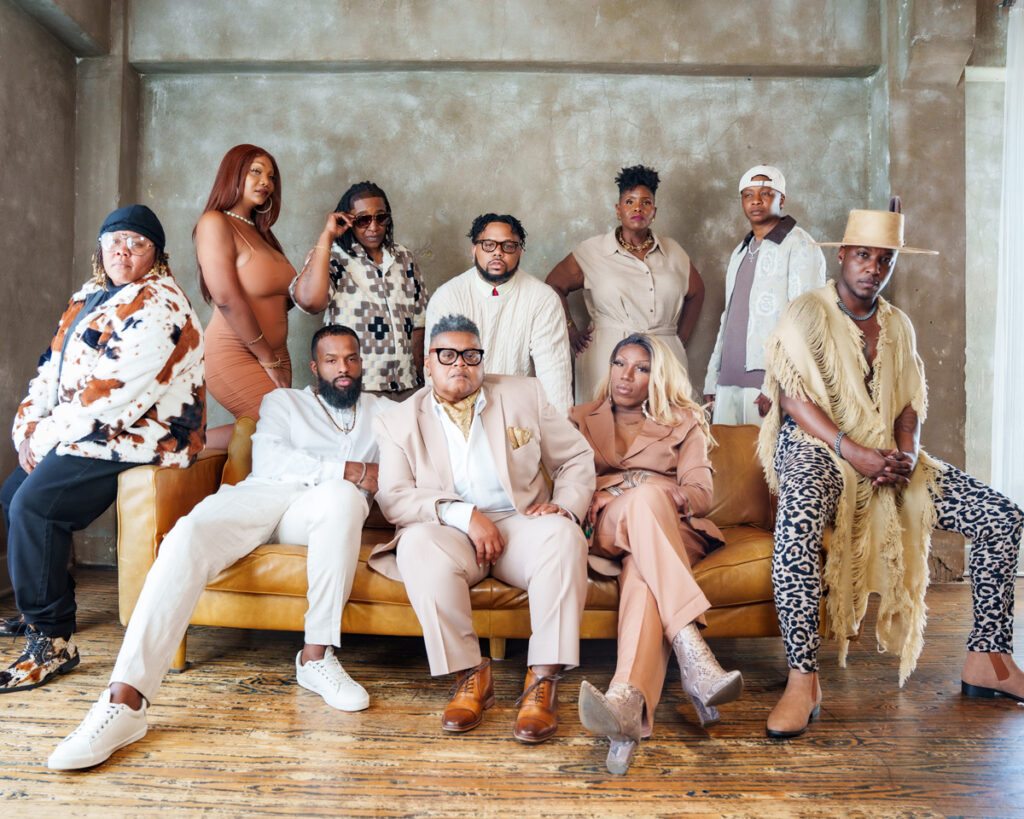
 It was 2004 when I first felt the sting of not being Black “like that.” Outed at school the day before, I walked into my high school carrying the weight of quiet conversations and awkward glances. Something had shifted. In that moment, it became clear: being a queer kid in a small Texas town meant I might never meet the expectations of my Black community as a man.
Two decades later, after founding an organization dedicated to addressing the issues of those who are most marginalized, I was asked a question that felt both familiar and revealing: “Why center Black queer people instead of all LGBTQ+ people?”
The question itself underscored the need. LGBTQ communities face real challenges—but when you look specifically at Black LGBTQ lives, those challenges intensify at the intersection of race, sexuality, and gender. The data tells a stark story: according to the National LGBTQ Task Force, 34% of Black trans women earn less than $10,000 annually, the Williams Institute says 56% of Black LGBTQ households are low-income, and 1 in 2 Black men who have sex with men are projected to contract HIV in their lifetime. These aren’t just statistics—they reflect compounded disparities that neither Black nor LGBTQ frameworks alone fully address.
That’s why we exist. And that’s why we created the Black Like That Community Festival.
“Black like that” is one of those phrases that lives in the margins—rarely defined, yet widely understood. It shows up in side-eyes, in jokes, in subtle judgments about who belongs and who doesn’t.
It’s in how you speak: too proper, too polished, or too “ghetto.” It’s in how you present: too intentional, too different, too much. It’s in who you love: too soft, too visible, too outside the lines.
If you’re Black and queer, you learn early that you’re navigating more than identity—you’re navigating expectations. You’re not just asked to be Black; you’re asked to be Black correctly. You’re not just asked to be queer; you’re asked to do so without disrupting too much.
Somewhere in that balancing act, authenticity becomes negotiation.
There’s a particular exhaustion in being both hypervisible and unseen. In some Black spaces, queerness is treated as a disruption—something to be quieted or softened. In some LGBTQ spaces, Blackness is tokenized—celebrated in theory but sidelined in practice.
The Black Like That festival was created not to alienate either space, but to reimagine both—to create an environment where Blackness and queerness are not afterthoughts, but centered realities.
Now in its fifth year, the festival represents more than a gathering—it signals a shift, and a move toward intentionally centering those who face the greatest barriers and building community from the margins outward.
What if “Black like that” isn’t a limitation, but an expansion? What if it holds space for softness, fluidity, contradiction? What if it includes the choir kid and the one who found liberation on a dance floor at 2 a.m.?
Blackness and queerness have never been singular. They are layered, adaptive, and constantly evolving. Black queerness doesn’t dilute identity—it deepens it.
Taking place at the end of Pride Month in Houston, the festival is intentionally rooted in history and culture. Held on June 27, it aligns with key moments: the eve of the Stonewall Riots, the anniversary of National HIV Testing Day, and a date deeply embedded in Houston’s musical legacy, with “June 27th Freestyle” released in 1996 by Sucka Free Records.
That cultural lineage matters.
“Sharing my screwed and chopped music with my grandma was our bridge across generations,” says Jordan J. Edwards, deputy director of The Normal Anomaly Initiative. “It showed me how Black culture moves—across time, across people, across identities.”
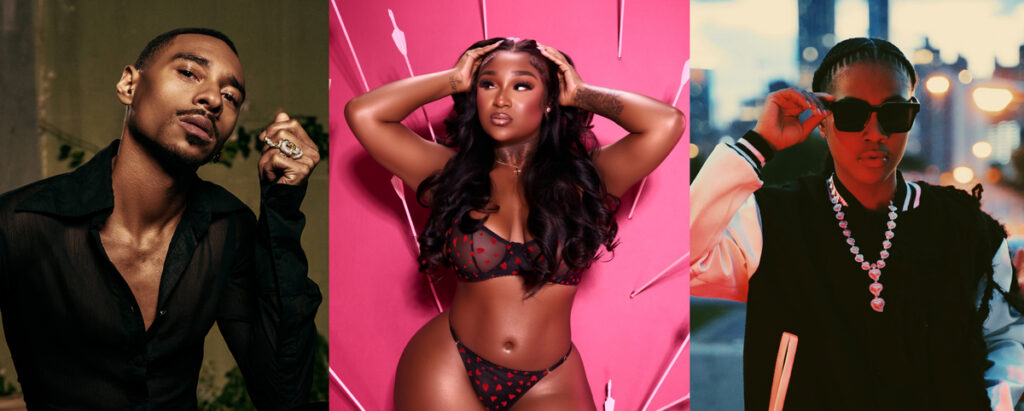
That same spirit shapes the festival experience. From drag performances honoring the legacy of Stonewall to the “June 27th Cypher” and a lineup of Black LGBTQ artists—including Tré Ward, S.O.U.L.A.S.P.H.E.R.E, and Tanya Nolan—the stage is intentionally curated to reflect the community it serves.
The event also brings together partners like Pride Houston, Avenue 360 Health and Wellness, and Legacy Community Health, alongside cultural curator Harrison Guy, who serves as our creative and producing director.
“Houston has always had a rhythm that belongs to us,” Guy says. “Whether you are Black like Barbara Jordan or Black like Billy Preston, this is an invitation to express your Black—your way.”
Held at The Hall at Ironworks, a site listed on the National Register of Historic Places, the festival is designed as an immersive experience. Co-headlined by Grammy Award-winning artist Durand Bernarr, Erica Banks, and Amari Noelle, it reflects the breadth and brilliance of Black LGBTQ culture.
As I reflect on my own journey—from that moment in high school to building this space—I no longer feel anchored in shame or anger. What once felt personal, I now understand as structural. What once felt fixed, I now know can move.
And we’ve moved it.
Every time we show up fully—without shrinking, without apology—we shift the boundaries a little further.
“Black like that” no longer feels like a judgment. It feels like a question—one we all get to answer together by showing up in community.
And the answer isn’t fixed. It’s evolving. It’s expansive.
It’s ours.
WHAT: Black Like That Community Festival
WHEN: Saturday, June 27, 2026, 2–9 p.m.
Where: The Hall at Ironworks, 711 Milby Street, Suite 200
INFO: tinyurl.com/blacklikethat