
The Language of Being Seen
Three Houstonians reflect on non-binary identity, visibility, and the power of being see.n

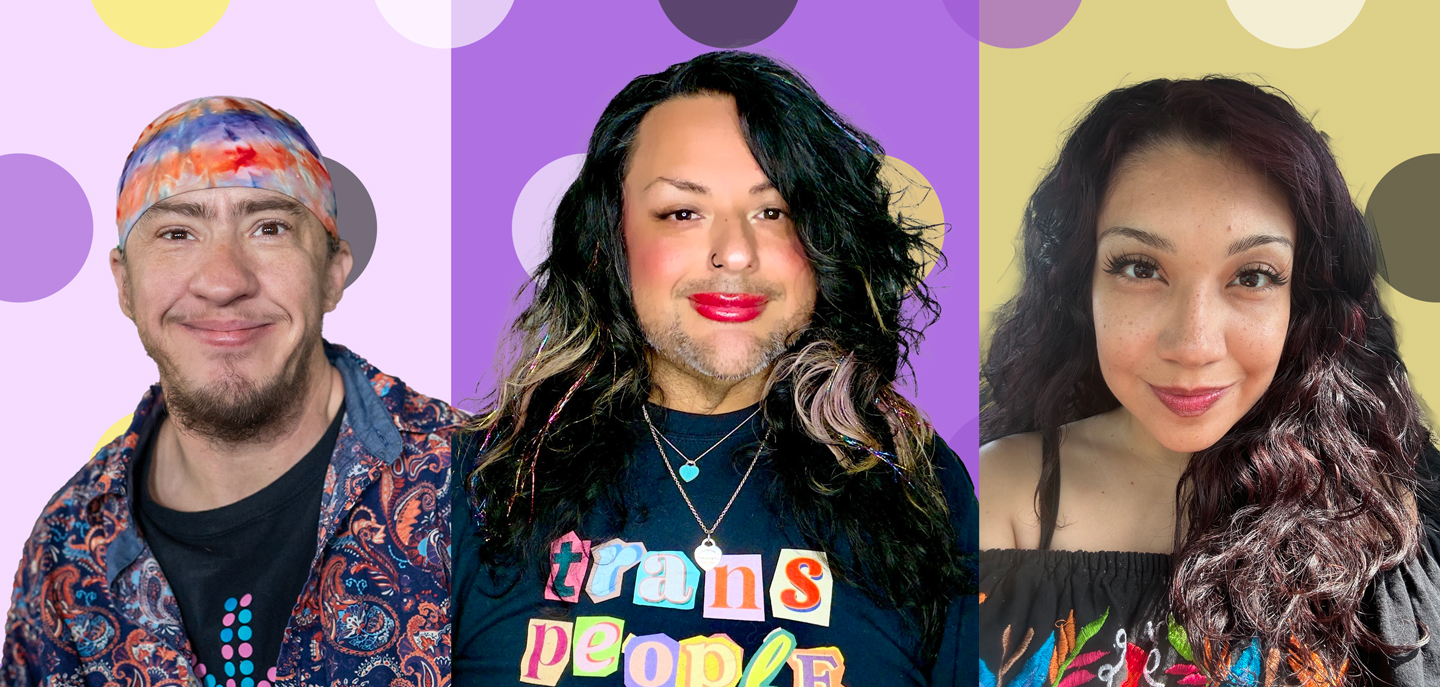
International Non-Binary People’s Day, first celebrated in 2012, is observed each year on July 14. The day raises awareness, increases visibility, and honors the diversity of people whose gender identities exist beyond the traditional categories of male and female.
The date was chosen because it falls midway between International Women’s Day on March 8 and International Men’s Day on November 19. That placement reflects the broad spectrum of gender identities that extend beyond the binary.
To mark the occasion, OutSmart spoke with three non-binary members of Houston’s LGBTQ+ community about what non-binary identity means to them and why recognizing this day matters.
Seen and Affirmed
Riot Stanley
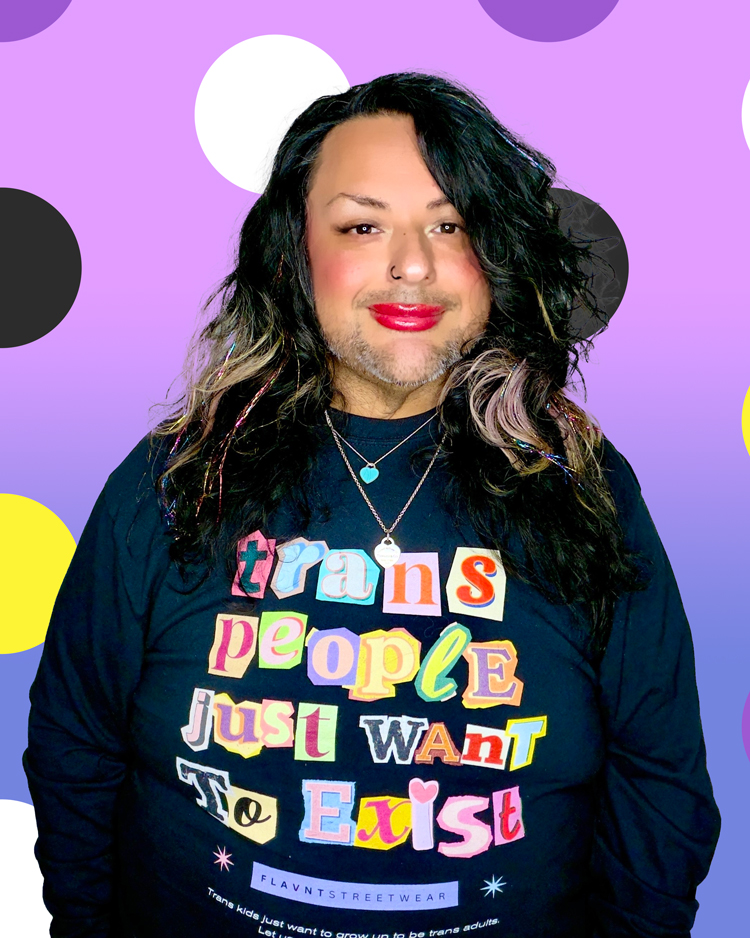
Riot Stanley, 43, identifies as a queer transgender non-binary person. “I always knew there was something different about how I experienced my gender,” they remember, “but growing up in South Texas, I lacked the language, resources, and representation to understand it.”
That sense of difference became more visible during the pandemic, when Stanley, like most of us, were coping with the reality of shuttered barber and beauty shops that had previously provided grooming services. “I never truly felt like a boy or a girl,” they say. “That became much clearer during the pandemic in 2020. With my hair growing longer and masks covering my facial hair, I was often gendered as either “ma’am” or “sir.” What stood out to me was that neither felt right.”
Discovering their nonbinary identity gave Stanley language for something they had felt all along. For the first time, they could say: “This is me.”
For Stanley, celebrating an annual day of recognition matters because “visibility and validation still cannot be taken for granted. Many non-binary people regularly encounter individuals who dismiss, question, or outright deny our identities,” they say. They also believe this special day reminds non-binary people that they are seen, that their experiences are real, and that they belong within broader society.
Stanley says the most common misconceptions about non-binary people are that “our identities are not real, that we are confused, seeking attention, mentally ill, or have somehow been influenced into identifying this way. I’ve also encountered the belief that being non-binary is simply a steppingstone and that we will eventually transition into a binary identity as a man or a woman.”
Through their personal journey, Stanley says they have learned to give themselves permission to “stop trying to fit into someone else’s definition of who I should be and instead honor who I truly am. Embracing my non-binary identity has been an act of self-acceptance and authenticity.”
Stanley also emphasizes the importance of inclusive language. “Gender-neutral language is important for the same reason gendered language is important,“ they observe. “It shows respect for individuals and acknowledges their existence.”
Looking ahead, Stanley envisions a future where people can express themselves authentically without feeling scrutinized or put on display—a world in which there is greater understanding that sexual orientation, gender identity, and gender expression are each distinct aspects of a person and do not have to align in a linear or predictable way.
Stanley holds a Master of Arts degree and is a licensed professional counselor-associate (supervised by Felicia Stone, MA, LPC-S). They are the founder of Riot & Refuge Counseling, a professional limited liability company that provides accessible, authentic, and compassionate mental health care rooted in human connection.
”The name reflects the balance between struggle and healing, resistance and rest, chaos and calm,” Stanley explains. “I partner with clients to support their growth, advocate for their needs, and empower them on their path toward healing, by allowing them to access affirming and culturally responsive mental health care.”
In 2025, they were recognized with the OutSmart Gayest & Greatest award for Best Non-Binary Mental Health Therapist and are also a recipient of the 2025 Victoria D. Austin Emerging Humanitarian & Counselor Award.
The Freedom to Define Yourself
Nore Gonzalez
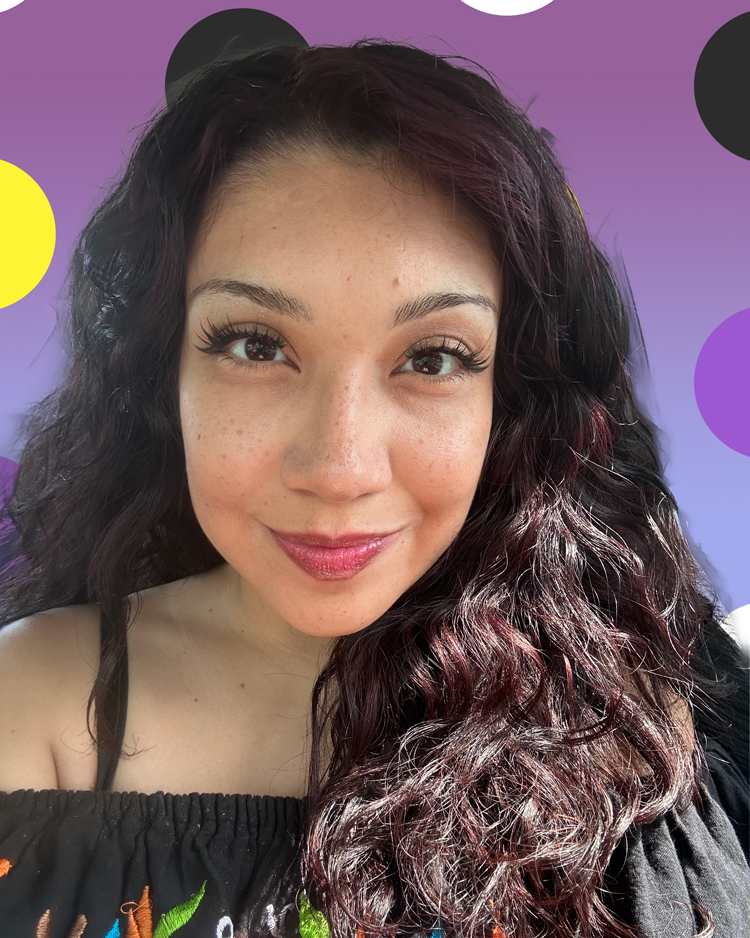
Nore Gonzalez, 30, identifies as a non-binary pansexual. “I knew I was non-binary long before I had a word for it,” they say. “Probably as early as fifth grade. Growing up, I never felt comfortable with the expectations attached to being a girl, but I also didn’t feel like becoming a man was the answer. It wasn’t until much later that I learned there were identities outside that binary.”
They say a dedicated day of recognition can help build visibility and understanding. “Many people have never knowingly met a non-binary person, so the day helps people learn from real experiences instead of assumptions. It reminds people that non-binary individuals are part of every community, workplace, family, and movement.”
“One of the biggest misconceptions is that non-binary people have to look androgynous or present as neither masculine nor feminine,” they note. “Gender identity and gender expression are not the same thing. There is no single way to look non-binary.”
Gonzalez says they have come to understand that authenticity and autonomy matter more than meeting someone else’s expectations. “Realizing I was non-binary taught me that I don’t have to earn my identity by looking a certain way, acting a certain way, or following rules that don’t fit me.”
“Language shapes how people feel seen and respected,” Gonzalez observes. “Gender-neutral language gives people room to define themselves and participate without feeling excluded. It is a simple way to acknowledge that not everyone’s experience fits into traditional categories.”
Looking forward, Gonzalez hopes future generations will experience more freedom and autonomy than they did. “Even today, women are often treated as though they need permission, guidance, or validation from someone else.
People ask where your husband is, who is going to take care of something for you, or when you’re going to have children. In professional settings, a man with the same education and experience is often taken more seriously than a woman.”
They envision a world in which a person’s opportunities, credibility, safety, and worth are shaped by who they are, not by their gender.
Gonzalez works as a citizenship navigator with Woori Juntos and now serves as a Latine community navigator. Their Citizenship Navigation Program is designed to assist individuals in navigating the U.S. naturalization process. The goal is to ensure that all eligible applicants, regardless of language barriers or financial constraints, receive the support they need to apply for U.S. citizenship. Navigators guide them through the process, ensuring that they have the necessary knowledge and resources to achieve U.S. citizenship.
Woori Juntos provides interpretation services and transportation assistance for United States Citizenship and Immigration Services interviews. They also teach citizenship and English classes, organize outreach efforts, and connect community members with resources that support their goals. “What I love most about this work is helping people live as freely as possible in this country—informed, empowered, and without fear.”
The Power of Standing Out
Ethan Michelle Ganz
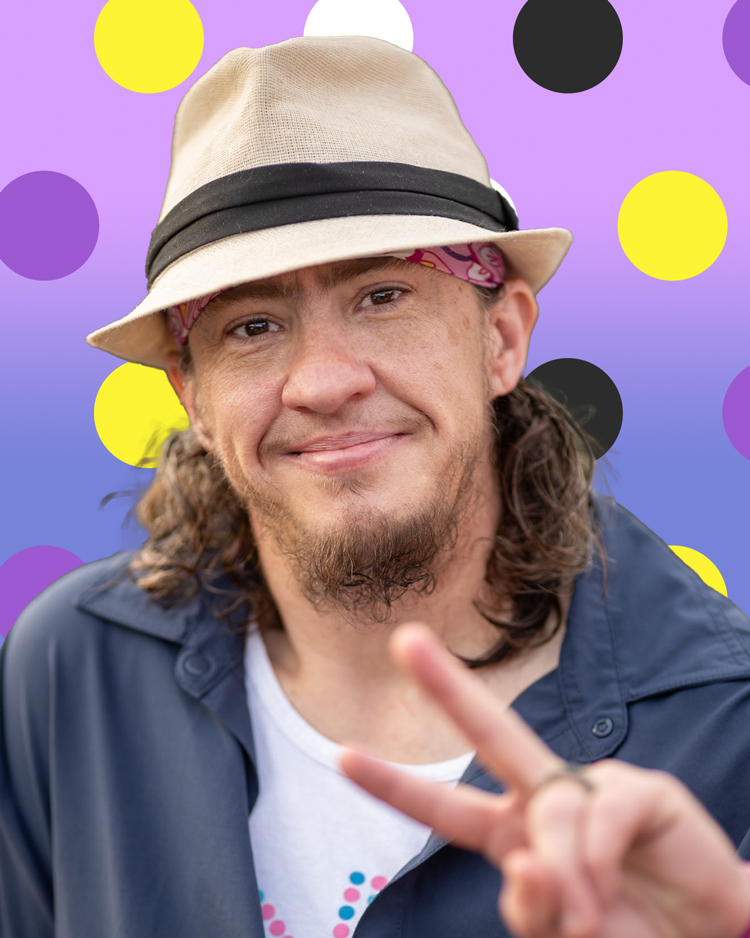
Ethan Michelle Ganz, 50, is a sapphic-romantic queer pansexual who identifies as gender non-binary, pangender and gender queer. “Before testosterone, I was a lesbian,” they reveal.
Ganz says their sense of self began early. “I always knew that I wasn’t a girl and I wasn’t a boy, but a little of both. I was six when I picked out my name Ethan. I didn’t have language for what I was, and I felt like I was the only one like me,” they remember. “It was the 1990s before I heard the term two-spirit, and that concept was exactly how I felt. It made me realize that people like me have always existed.”
Non-Binary Persons Day matters to Ganz because visibility is still hard won. “People who exist outside of the binary gender idea are mostly erased. Even with supportive folks, it can be difficult to really be seen.”
They say a common misconception is “that we are all alike. We are all individual. We are unique occurrences of energy frequencies. I think gender expansive folks are just more in tune with that unique setting than the general public. We are a minority within a minority. Our lived experiences are rare. I feel honored to be who I am and walk a path few get to walk.”
The greatest lesson Ganz has learned is “to love and accept myself. Instead of fitting in, my superpower is standing out. No matter what, people remember me once meeting me. As a kid I just wanted to be like everyone else, but at fifty I am happy that I am not like everyone else. I never fit into the boxes. I learned early in my life that I don’t have the energy to be something that I am not. So, authenticity has been a place of peace for me and has been an inspiration to others.”
Gender-neutral language matters to Ganz “because it is inclusive. I am a Southerner from birth, so my favorite gender-neutral word is y’all. Men and women can both feel included with gender-neutral language. Also, non-binary doesn’t have a look. Some of us are feminine presenting, some are masculine presenting, and some are very androgynous. You can’t tell a person’s gender just by looking at their presentation. It is safer to start with gender neutral language until you find out how each person prefers to be addressed.”
Ganz hopes gender expression continues to become more queer and individualized. “I hate cookie-cutter looks. It’s like people lose some individuality to group think. I wish for people to be more in tune with themselves and share that authenticity.”
In 2023, after reports of anti-LGBTQIA hate increased in the gayborhood, Ganz founded Q-Patrol to monitor streets outside bars and be visible. The group has also provided safety support for Rice University Lavender Graduation and other local queer events. “The majority of my folks are non-binary or binary trans folks,“ they note.
That same year, Ganz was elected Pride Houston’s Gender Non-Binary Grand Marshal and ran for Houston City Council as an openly trans person. They have also won multiple OutSmart Gayest and Greatest awards.
Last year, Ganz curated a trans art festival at the Rothko Chapel, featuring poetry, music, and fashion design, which was such a success that it is now an annual event.
In 2025, Ganz joined the popular podcast Queer Voices, explaining that because “the powers that be want to shut us up, it is time to get louder. I want the world to see our beautiful community the way I do, with love and admiration. In a time when everywhere you turn, we are being dehumanized with the rhetoric being used, it is important to show our humanity to the world.“